Best Cob Led Strip for 2026 What You Need to Know?
In the world of modern lighting, the Cob Led Strip stands out for its efficiency and versatility. As we look ahead to 2026, understanding what makes a Cob Led Strip the best choice is crucial. These strips provide even illumination and consume less energy compared to traditional lighting. Many users appreciate their ability to transform spaces, but selecting the right one can be overwhelming.
Quality and performance are key factors to consider when choosing Cob Led Strips. Different products offer varying brightness levels and color temperatures. It's essential to focus on brands with proven expertise in LED technology. Customer reviews can provide insights, but not all reviews are trustworthy. Some may exaggerate benefits, while others might overlook drawbacks.
Investing in the right Cob Led Strip can enhance your living or working environment significantly. However, be mindful of the compatibility with existing fixtures. As you explore options, budgeting is also critical. Cost-cutting on low-quality strips can lead to disappointing results. Always do thorough research before making a purchase.

Understanding Cob LED Strip Technology for 2026
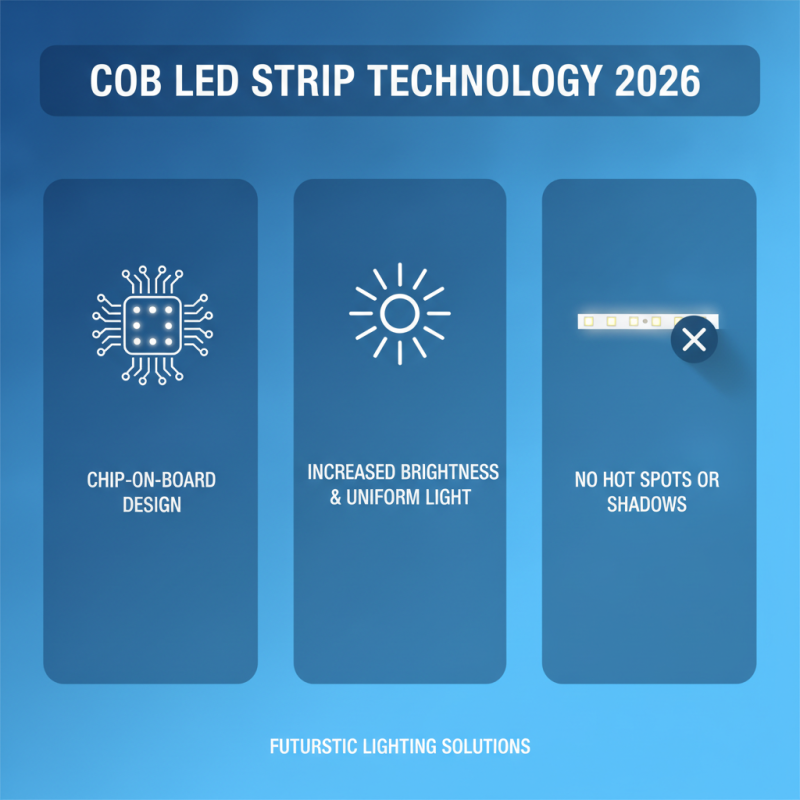
Cob LED strip technology is making waves in 2026. These strips use a unique chip-on-board (COB) design. This design provides several advantages. Increased brightness and uniform light distribution are key features. This means fewer hot spots and shadows in your lighting setups.
Understanding how COB technology works is crucial. Unlike traditional LEDs, COB LEDs pack multiple tiny chips onto a single board. This creates a more cohesive light source. Besides, energy efficiency is another big plus. COB LED strips often consume less power while delivering more light. This makes them suitable for both residential and commercial applications.
However, not all COB LED strips are created equal. Consumers should pay attention to color rendering index (CRI) values. A lower CRI may result in unappealing color accuracy. Additionally, consider longevity and thermal management. Poor quality strips may overheat, leading to a shorter lifespan. Researching options is essential to make informed choices.
Key Features to Consider When Choosing Cob LED Strips
When selecting a COB LED strip, specific features will significantly influence your choice. Brightness is a crucial factor; check for lumen output to ensure adequate lighting. Color temperature also plays a role, with options ranging from warm to cool white. Identifying the right temperature sets the mood in your space. You may prefer a subtle glow or bright daylight for tasks.
Flexibility and length of the strip matter too. Measure your space before purchasing. Many COB LED strips come in various lengths and can be cut to fit. Not all are easy to bend, so check for flexibility in your design. Installation also requires attention. Some strips have adhesive backing for quick setup, while others may need additional mounting materials.
Another consideration is energy efficiency. Look for strips with lower wattage that do not compromise brightness. Some options even feature dimmable functions, adding versatility to your lighting scheme. Pay attention to heat emission as well; cooler strips lead to longer lifespans. You’ll want durability in your choice, but reviews can sometimes be misleading, so weigh opinions critically. Achieving the right balance of these features can enhance your lighting experience.
Top Brands and Models of Cob LED Strips for 2026
When exploring the top brands and models of COB LED strips for 2026, several factors stand out. These strips offer impressive flexibility and energy efficiency. They provide a soft, diffused light that is perfect for both ambient and task lighting. You can use them in various settings, from homes to commercial spaces. Many models come with advanced features such as dimming capabilities and color temperature adjustments.
However, not all COB LED strips are created equal. Some brands may claim high lumens output but fall short in real-world applications. It's essential to check user reviews and performance metrics before making a choice. Look for strips with a solid build and long lifespan. Different models may have varying brightness levels, so understanding your specific needs is crucial.
Innovation in COB technology is fast-paced. New designs emerge regularly, often with improved light quality and efficiency. Sometimes, the latest model may have a few unforeseen issues, such as compatibility with older dimmers. This emphasizes the importance of research and consideration before purchasing. Engaging with user forums can yield valuable insights and help in making informed decisions.
Installation Tips for Efficient Use of Cob LED Strips
When installing COB LED strips, awareness of key factors can enhance their efficiency. COB technology is known for its uniform light distribution. This feature reduces shadowing and creates a smoother light experience. Industry reports indicate that users can save up to 80% on energy consumption compared to traditional lighting solutions. Yet, improper installation may negate these benefits.
Always check compatibility with your power supply. Using the correct voltage ensures optimal performance. Selecting the appropriate adhesive backing is crucial for longevity. It should withstand temperature fluctuations and humidity, particularly in kitchens or bathrooms. Regular testing of LED connections will prevent flickering and extend lifespan.
Tip: Measure the installation area accurately. This precision can prevent wasted materials. If errors occur, don’t underestimate the value of repositioning the strips. Evaluation of light intensity can guide placement decisions. Lastly, consider dimmers to enhance versatility. Adjusting brightness can create the desired ambiance while further saving energy.
Sustainability and Energy Efficiency of Cob LED Technology
Cob LED technology has revolutionized the lighting industry. Its sustainability factor is noteworthy. These lights use less energy compared to traditional bulbs. This results in a lower carbon footprint. Consumers can appreciate the long lifespan of cob LEDs, lasting up to 50,000 hours. This durability reduces waste, aligning perfectly with eco-friendly goals.
Energy efficiency is paramount in today's world. Cob LED strips consume up to 80% less energy. They provide bright illumination without excessive power use. Moreover, better heat management extends their longevity. High energy consumption leads to increased utility costs and environmental degradation. The innovative design of cob LEDs mitigates these issues, making them a responsible choice for many.
However, there are challenges. Initial costs can be higher than standard options. Not every cob LED strip offers the same quality. Some may not meet energy-saving claims. Consumers should do thorough research before purchasing. While cob technology is promising, it's essential to remain critical and informed. This approach ensures smart investments in sustainable lighting solutions.
Best Cob Led Strip for 2026 What You Need to Know? - Sustainability and Energy Efficiency of Cob LED Technology
| Feature |
Specification |
| Color Temperature |
3000K (Warm White) |
| Luminous Flux |
1000 lumens per meter |
| Input Voltage |
24V |
| Power Consumption |
15W per meter |
| Lifespan |
50,000 hours |
| Energy Efficiency Rating |
A+ (Highly Efficient) |
| Environmentally Friendly |
No mercury, recyclable |
| Dimmable Option |
Yes |