How to Choose the Best SMD LED Light for Your Needs?
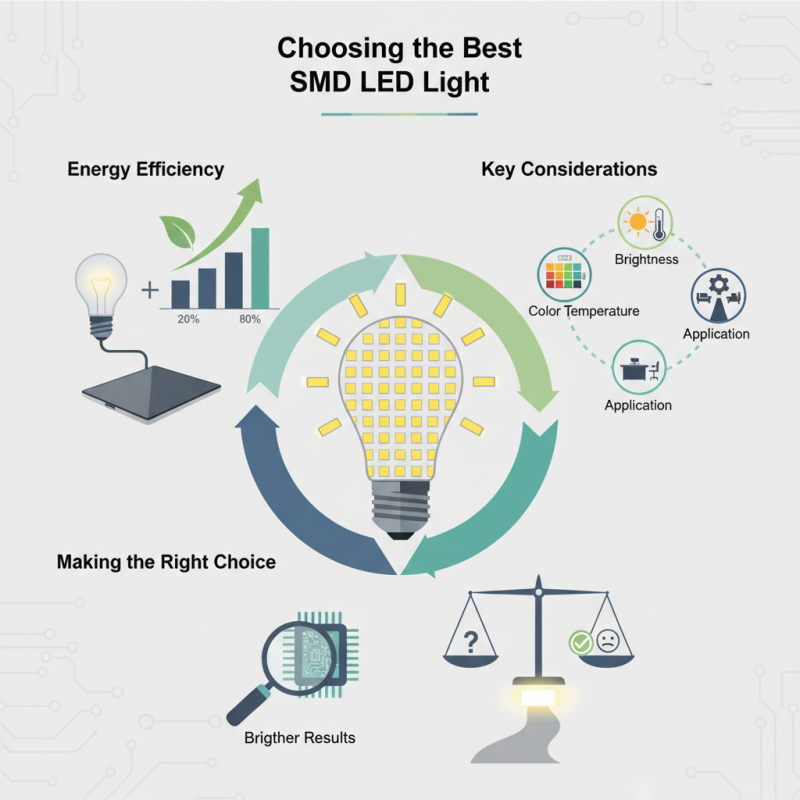
Choosing the right SMD LED light can be challenging. With various options available, the decision often overwhelms consumers. According to a recent report by the Lighting Research Center, SMD LED lights improve energy efficiency by up to 80% compared to traditional lighting. This statistic emphasizes the importance of selecting quality products.
Industry expert Dr. John Lumens states, “Understanding your specific lighting needs is crucial for optimal performance.” His insight highlights the need for awareness regarding brightness, color temperature, and application. Small variations in specifications can lead to substantial differences in effectiveness and energy savings.
Moreover, consumers should be cautious. Many products claim high performance but fall short. It can be frustrating to choose the wrong SMD LED light. Being informed can help mitigate regrets. Paying attention to details can lead to better choices and brighter results.
Understanding SMD LED Lights: Basics and Benefits
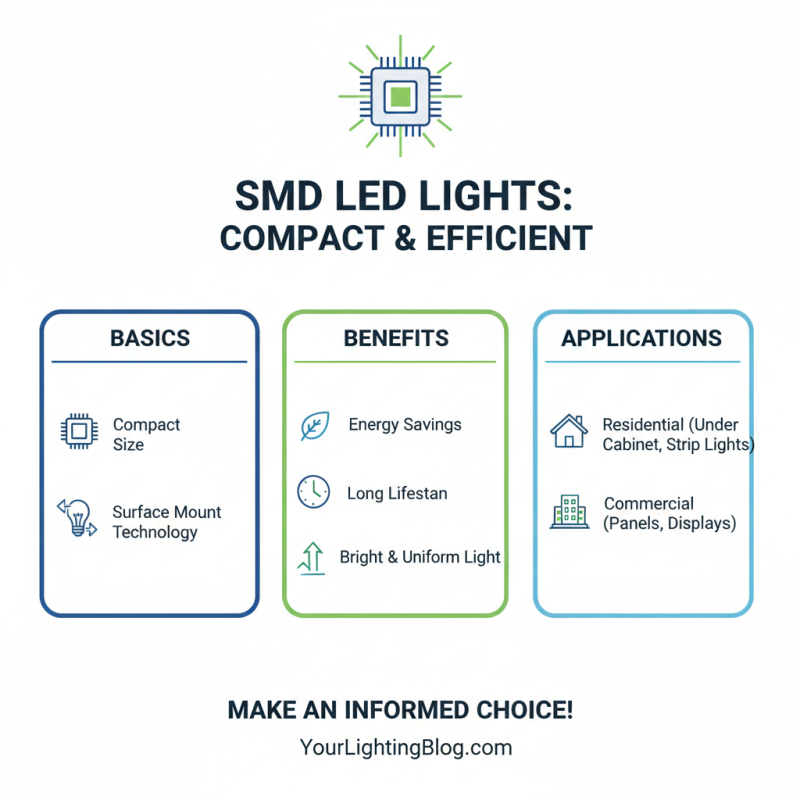
SMD LED lights have become essential in various applications. They are compact and efficient, making them ideal for both residential and commercial use. Understanding their basics and benefits is crucial for making an informed choice.
SMD stands for Surface-Mounted Device. These LEDs are mounted directly onto a PCB. This design reduces space and improves heat dissipation. According to recent reports, SMD LEDs are generally 80% more energy-efficient than traditional lighting. This efficiency leads to cost savings over time.
**Tips:** Consider the color temperature. A warm white light is cozy for homes. For workspaces, cooler temperatures enhance focus.
Another aspect to consider is brightness, measured in lumens. Higher lumens mean brighter lights. Some may overlook this, leading to dimly lit spaces. Research suggests 800 lumens is ideal for typical rooms.
**Tips:** Assess your space before choosing brightness. Too much light can be overwhelming.
Be mindful of the color rendering index (CRI), which indicates how accurately colors appear under SMD lighting. A CRI of 90 or above is desirable for true color representation. Not all SMD LEDs achieve this. Future replacements may be necessary as needs change.
Key Factors to Consider When Choosing SMD LED Lights
When choosing SMD LED lights, several key factors must be considered. One important aspect is brightness. Measured in lumens, a higher lumen count indicates a brighter light. For example, a typical SMD LED might emit around 80-100 lumens per watt. Understanding your needs, whether for accent lighting or a workspace, will guide your selection.
Color temperature is another critical factor. It impacts the ambience of your space. Residential areas often prefer warmer lights, around 2700K-3000K. In contrast, cooler temperatures, ranging from 4000K to 5000K, are ideal for offices and productivity. However, some may find the harsher cool lights uninviting for home settings.
**Tips**: Always check the CRI (Color Rendering Index) value. A CRI above 80 is preferable for true color representation. Moreover, consider the lamp’s lifespan. Many SMD LEDs can last up to 50,000 hours, but quality varies.
Not all SMD LEDs perform equally. Inconsistent quality can affect energy efficiency. Reports indicate that some products waste 30% of energy due to poor design. Conduct research and read reviews before purchasing. It’s wise to invest time in finding the right quality to avoid future dissatisfaction.
How to Choose the Best SMD LED Light for Your Needs?
| Factor |
Description |
Importance Level |
| Lumen Output |
Measures the brightness of the light produced. |
High |
| Color Temperature |
Indicates the color of the light, typically measured in Kelvin (K). |
Medium |
| Wattage |
Indicates the power consumption of the light. |
High |
| Beam Angle |
Determines how narrow or wide the light spreads. |
Medium |
| Lumens per Watt |
Measures energy efficiency of the light source. |
High |
| Lifespan |
Estimated operational hours before significant brightness loss. |
Medium |
| Cost |
Initial purchase price and potential savings over time. |
High |
| Dimming Capability |
Ability to adjust light intensity; important for ambiance. |
Low |
Different Types of SMD LED Lights and Their Applications
When choosing SMD LED lights, understanding their types is crucial. There are various SMD LED lights, each suited for specific applications. For example, surface-mounted LEDs are common in home lighting. They provide excellent illumination while saving energy. On the other hand, RGB SMD LEDs allow users to change colors easily. This versatility makes them popular for decorative purposes.
Another type is high-power SMD LEDs. They deliver intense brightness, making them ideal for outdoor floodlights. However, their heat generation requires careful management. In contrast, low-power SMD LEDs are suitable for small devices. They fit well in compact spaces, but their brightness is limited.
When selecting an SMD LED, consider the application. It’s essential to balance brightness and energy efficiency. Also, think about the heat dissipation needs of high-power options. The wrong choice can lead to overheating. Reflect on your specific needs to make the best decision.
How to Evaluate Brightness and Color Temperature
When evaluating SMD LED lights, brightness and color temperature are two critical factors.
Brightness is measured in lumens.
Higher lumens mean a brighter light. It’s essential to consider the space where the light will be used.
For a cozy room, you may not need extreme brightness. Too much light
can create an uncomfortable atmosphere.
Color temperature affects the mood and functionality of a space.
It is measured in Kelvin. A warm white light (around 2700K)
creates a relaxed feel. It’s ideal for living rooms or bedrooms. Cooler whites (5000K or above) are better for workspaces.
They help boost focus and alertness. However, a too-cool light can feel harsh and uninviting.
Think about how you want the light to feel. Test different bulbs if possible.
A light that works for one room may not suit another. Pay attention to the shadows created by the light too.
They can affect the overall ambiance.
Experimentation is necessary for finding the perfect balance.
Energy Efficiency and Lifespan of SMD LED Lights
When selecting SMD LED lights, energy efficiency plays a crucial role. These lights convert a large portion of electrical energy into visible light, minimizing wasted energy. They consume less power while providing adequate brightness, making them cost-effective in the long run. Users often notice lower electricity bills after switching to SMD LEDs. This is a vital factor for homeowners and businesses alike.
Lifespan is another important consideration. SMD LED lights typically last longer than traditional bulbs. They can function effectively for up to 50,000 hours or more. This durability reduces the frequency of replacements, saving time and resources. However, some users might overlook potential issues like overheating or poor heat dissipation. Inadequate cooling can lead to a reduced lifespan. Hence, checking specifications and ensuring proper installation is essential to maximize their benefits.
Energy Efficiency and Lifespan of SMD LED Lights