China Top Flush Mount Lighting Manufacturers?
Choosing among China’s top Flush Mount Lighting manufacturers requires more than comparing prices. Buyers need evidence of optical performance, electrical safety, thermal control, and production consistency. A bright showroom sample can still hide uneven diffusion or audible driver noise.
The International Energy Agency reports that lighting uses roughly 15% of global electricity consumption. The U.S. Department of Energy also states that LED products use at least 75% less energy than incandescent lamps. These figures explain the demand for efficient ceiling fixtures in homes, hotels, offices, and retail spaces. They also raise expectations for responsible manufacturing.
Health matters too. Dr. Mariana Figueiro, a leading light-and-health researcher, has said, “Light is the most powerful synchronizer of the human circadian system.” Her point is relevant to Flush Mount Lighting, especially in bedrooms, care facilities, and workplaces. Color temperature, glare, flicker, and nighttime exposure deserve careful review.
Industry reports from Grand View Research and Fortune Business Insights show continued growth in LED lighting markets, although their market values differ. That difference deserves caution. Forecasts are useful, but they are not guarantees.
A dependable Chinese supplier should provide LM-80 or TM-21 data, CRI results, flicker measurements, and clear warranty terms. Certifications should match the destination market. Factory audits, sample testing, and batch records add practical confidence. Even then, one unresolved question remains: will performance stay stable after years of heat, dust, and voltage variation? A strong manufacturer should answer with test evidence, not polished claims.
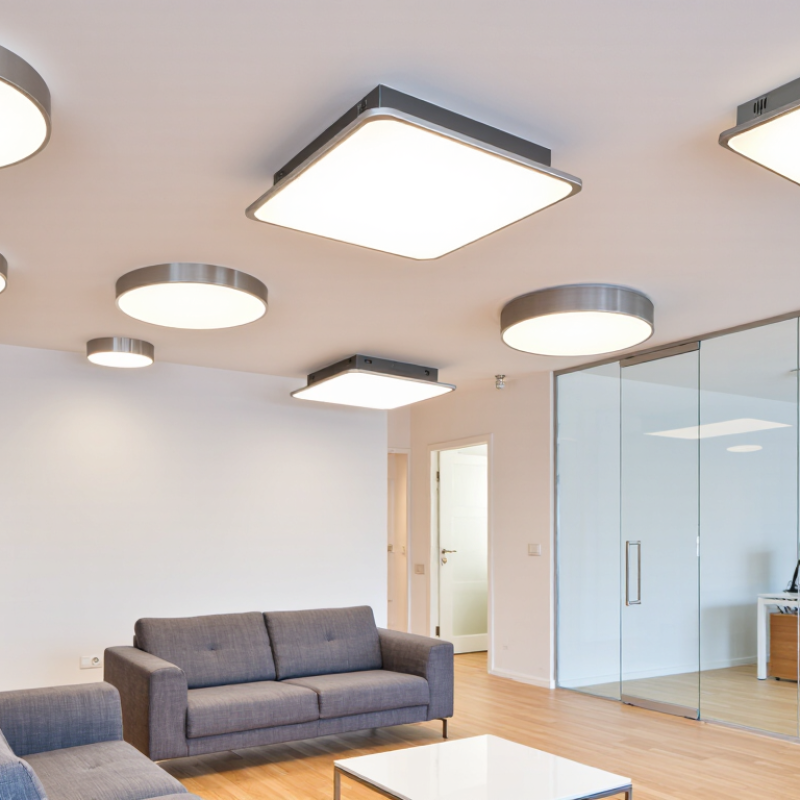
When comparing China’s top flush-mount lighting manufacturers, system efficacy deserves close attention. The practical benchmark for current LED flush mounts is 100–140 lm/W. This figure should describe the complete luminaire, not only the LED chip.
A 24-watt fixture producing about 2,880 lumens reaches 120 lm/W.
That output suits bedrooms, corridors, offices, and compact retail spaces. At 4000K with CRI 80 or higher, it can provide balanced, useful light. Real rooms are less forgiving. Diffusers, drivers, heat, and optical losses can reduce performance. A catalogue figure may look stronger than the installed result.
Experienced buyers should request test data from an independent laboratory. Useful documents include photometric files, electrical test results, and lumen-maintenance data. Testing should identify input wattage, measured lumens, color temperature, CRI, and ambient conditions. Ask whether the reported efficacy is initial or maintained. This distinction matters after long operating hours.
A 130 lm/W result at 25°C may fall under a tightly enclosed ceiling. Thermal design remains a frequent weakness in slim fixtures.
Factory assessment should include sample inspection and batch consistency. Check the diffuser for uneven brightness, dark corners, and visible LED points. Test several units, not one perfect sample.
I have seen small driver variations change measured output noticeably. That finding is inconvenient, but it improves purchasing decisions. A reliable manufacturer explains these limits instead of promising identical performance in every installation.
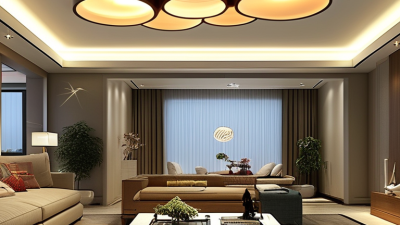
Identifying a strong flush mount lighting manufacturer requires more than a polished catalog. Start with MOQ, production capacity, and lead-time records. The U.S. Department of Energy reports that LED products use at least 75% less energy than incandescent lighting. This makes thermal design, driver quality, and testing evidence essential. Ask for recent test reports, not generic certificates. A reliable factory should explain lumen output, color consistency, lifespan testing, and failure rates clearly.
MOQ reveals how flexible the supplier is. A low MOQ may support product testing, but it can also indicate limited purchasing power. Request capacity by model, not only monthly factory output. For example, ask how many 300 mm flush mounts can be assembled weekly during peak season. Compare this with order history and production schedules. A practical target is a documented lead time of 20–35 days for standard models. Customized finishes may require longer. The 2023 International Energy Agency energy-efficiency report confirms LEDs now dominate new lighting sales, increasing demand pressure across supply chains.
Tips: Ask for three months of delivery records. Check whether lead time includes testing and packing. Request a pilot order before scaling. My own caution is simple: capacity figures are often optimistic. Verify them through factory visits, live production checks, or independent inspections. A manufacturer that admits constraints may be more dependable than one promising everything.
When evaluating flush mount lighting manufacturers in China, begin with measurable performance, not polished product photos. A reliable specification should show CRI ≥80, supporting more natural colors in homes, offices, and hospitality spaces. Request the test method and sample conditions. A single showroom sample proves little.
Power factor should reach PF ≥0.90. This indicates more efficient electrical use and helps reduce unnecessary current in larger installations. Check whether the figure applies at full load, not only under ideal laboratory conditions. A practical review should include a power meter, a warm-up period, and repeated readings. Small differences matter.
L70 ≥50,000 hours means the LED module is expected to retain at least 70% of its initial light output after that period. It does not mean the fixture will remain equally bright forever. Ask for LM-80 data, thermal test results, and the projected lifetime calculation. Heat is the quiet problem. Inspect the aluminum housing, driver placement, and ventilation design. I have found that attractive thin fixtures sometimes manage heat poorly. That finding deserves more testing, not a quick rejection. Manufacturers with traceable reports, stable production records, and responsive technical teams offer stronger evidence of expertise and reliability. Factor in installation height, ambient temperature, switching frequency, and driver quality before approving a large order.
When evaluating China’s top flush mount lighting manufacturers, safety documentation should come before appearance or price. IEC 60598-1 covers essential requirements, including insulation, wiring, temperature rise, mechanical strength, and protection against electric shock. A reliable manufacturer should provide current test reports, product drawings, and traceable component records.
CE marking requires a valid Declaration of Conformity for applicable European requirements. RoHS evidence should confirm restricted substances in solder, plastics, cables, and metal parts. Do not accept a logo alone. Ask for laboratory reports that match the exact model, rated voltage, and production version. Small differences matter.
For North American projects, UL or ETL certification must cover the complete luminaire, not only the driver. IP ratings also need careful interpretation. IP20 suits dry indoor spaces, while IP44 offers protection against splashing water. Bathrooms and covered outdoor areas may still require local code approval. I have seen projects delayed because an IP44 sample used an unapproved cable gland. The label looked correct. The assembly was not. Factory audits, repeated sample testing, and production-line inspections reduce this risk, although paperwork can never replace physical verification.
| Compliance Dimension | Applicable Standard or Mark | What It Covers | Typical Evidence to Request | Relevance to Flush Mount Lighting |
|---|---|---|---|---|
| General luminaire safety | IEC 60598-1 | General requirements and tests for luminaires, including protection against electric shock, insulation, earthing, creepage and clearance distances, abnormal operation, mechanical strength, thermal endurance, and markings. | Laboratory test report, construction review, wiring diagram, critical component list, and product rating label. | Core safety reference for fixed ceiling and wall luminaires. The applicable Part 2 product standard should also be identified where relevant. |
| Product-specific luminaire requirements | IEC 60598-2-1, where applicable | Particular requirements for fixed general-purpose luminaires, used together with IEC 60598-1. | Test report showing both the general requirements and the applicable product-specific requirements. | Often relevant to permanently installed flush mount ceiling fixtures, depending on the design and intended installation method. |
| European market access | CE marking | A manufacturer’s declaration that the product complies with applicable European Union legislation. For many mains-powered luminaires, this may include the Low Voltage Directive, EMC Directive, and RoHS requirements. | EU Declaration of Conformity, technical file summary, applicable test reports, product label artwork, and user instructions. | CE is not a laboratory certification mark by itself. The documentation should identify the exact model, directives, standards, and responsible economic operator. |
| Electromagnetic compatibility | EMC requirements; commonly assessed using EN 55015, EN 61547, and EN 61000-3-2/-3-3 where applicable | Controls conducted and radiated emissions, immunity to electromagnetic disturbances, harmonic current emissions, and voltage fluctuation or flicker. | EMC test report covering the complete luminaire, including the LED driver and control gear. | Important for installations containing multiple LED fixtures, dimmers, sensors, or other electronic equipment. |
| Restricted substances | RoHS Directive 2011/65/EU and amendment (EU) 2015/863 | Restricts specified hazardous substances in electrical and electronic equipment, including lead, mercury, cadmium, hexavalent chromium, PBB, PBDE, and four phthalates. | RoHS declaration, material declarations, supplier declarations, and risk-based chemical test results such as XRF screening where appropriate. | Review the luminaire, PCB, solder, cable insulation, plastic housing, coating, and LED driver components rather than relying only on a general product statement. |
| North American safety certification | UL certification or an ETL Listed mark | Third-party certification to applicable U.S. and, where included, Canadian electrical safety requirements. UL and ETL marks are certification routes, not interchangeable product standards. | Certificate or listing record, certification file number, authorized marking label, installation instructions, and scope covering the exact model family. | Confirm whether the approval covers dry, damp, or wet locations and whether the complete fixture or only a component is certified. |
| U.S. and Canadian construction standards | UL 1598 and/or CSA C22.2 No. 250.0, as applicable | Common safety standards for luminaires used in North America, including construction, wiring, grounding, thermal, marking, and installation requirements. | NRTL certification record stating the standard edition, product category, electrical ratings, and installation location classification. | A component approval for an LED driver does not automatically certify the finished flush mount luminaire. |
| Ingress protection system | IEC 60529 IP Code | Classifies protection provided by an enclosure against access to hazardous parts, solid foreign objects, and water ingress. The rating should be verified for the complete assembled product. | IP test report identifying the test configuration, mounting orientation, seals, cable entries, and exact model number. | The correct rating depends on the installation environment, ceiling design, diffuser, gasket, cable entry, and maintenance conditions. |
| IP20 | IP2X / IPX0 | Protection against access to hazardous parts with a finger and against solid objects 12.5 mm or larger; no stated protection against water. | IEC 60529 test evidence or a valid product specification supported by testing. | Typically intended for dry indoor rooms such as bedrooms, living rooms, offices, and corridors. |
| IP21 | IP2X / IPX1 | Finger protection and protection against vertically falling water drops. | IEC 60529 test report for the complete luminaire in its specified mounting position. | May suit locations with limited overhead condensation or occasional vertical dripping, subject to the installation instructions. |
| IP23 | IP2X / IPX3 | Finger protection and protection against water sprayed up to 60 degrees from the vertical. | IEC 60529 spray test evidence with the product orientation clearly stated. | Can be considered for some covered or semi-protected areas, but it is not equivalent to protection against water jets or immersion. |
| IP44 | IP4X / IPX4 | Protection against solid objects 1.0 mm or larger and against water splashed from all directions. | IEC 60529 test report for the complete fixture, including diffuser, gasket, joints, and cable entries. | Often considered for bathrooms, utility rooms, covered exterior areas, or other locations exposed to splashing, subject to local electrical codes. |
| Model and production consistency | Technical file and change-control records | Ensures that the tested design, LED driver, diffuser, wiring, housing, markings, and production version remain consistent with the supplied product. | Bill of materials, approved component list, production inspection records, sample photographs, serial or batch traceability, and change-notification procedure. | Particularly important when one flush mount model is offered with multiple wattages, color temperatures, sensors, dimming options, or regional electrical ratings. |
China Top Flush Mount Lighting Manufacturers?
Manufacturer Comparison: OEM/ODM Services, Warranty Terms, and Total Cost of Ownership
Choosing a leading Chinese flush mount lighting manufacturer requires more than comparing unit prices. Practical sourcing reviews should examine factory experience, production control, and communication quality. Ask for recent samples, inspection records, and clear production photographs. A reliable supplier should explain diffuser materials, LED performance, driver quality, and thermal management without vague claims.
OEM and ODM support can reduce development time, but services differ widely. Confirm whether the manufacturer provides photometric files, CAD drawings, sample revisions, packaging design, and tooling support. Check minimum order quantities and sample charges before approving a project. Some factories promise full customization, yet offer limited engineering assistance after receiving the deposit. That gap deserves attention.
Warranty terms must state coverage length, failure definitions, replacement procedures, and freight responsibilities. A two-year warranty may sound adequate, but exclusions can weaken its value. Request failure-rate data from comparable models. Also calculate total cost of ownership, including energy use, installation labor, spare drivers, returns, shipping, and disposal. A cheaper fixture may create higher maintenance costs over five years. One detail is often missed: inconsistent color temperature can increase replacement work across a large building. Not every quote is truly economical. Supplier comparisons should use the same specifications, testing requirements, and delivery assumptions. Even then, estimates remain imperfect and should be reviewed after pilot installation.
This anonymous industry benchmark compares common China supplier profiles by OEM/ODM capability, standard warranty duration, and five-year total cost of ownership. The TCO index is normalized to 100, where a lower score indicates lower combined purchase, installation, maintenance, replacement, and energy costs.