2026 Top Led Strip Lights Outdoor for Your Home or Business?
The demand for versatile and efficient lighting solutions continues to rise. Among these options, LED strip lights outdoor stand out for their adaptability and energy efficiency. These lights can transform spaces, enhancing both home and business environments. Many homeowners and business owners seek innovative ways to illuminate their exteriors. LED strip lights offer a stylish solution that is both functional and eye-catching.
When choosing LED strip lights outdoor, consider various factors. Think about the brightness, color options, and waterproof ratings. These aspects significantly impact how well the lights perform in different weather conditions. The flexibility and ease of installation of these lights can be a double-edged sword. While they are user-friendly, improper installation might result in underwhelming performance.
The ideal outdoor lighting can make a dramatic difference in ambiance and security. LED strip lights can provide both, but it's crucial to reflect on your specific needs. Some may find their lighting solutions lacking after installation. Careful planning and consideration can prevent such disappointments. Ultimately, investing in quality LED strip lights outdoor can enhance your space significantly when chosen wisely.
2026 Trends in LED Strip Lights for Outdoor Use
As outdoor LED strip lights gain popularity, 2026 will showcase significant trends. Many homeowners and businesses embrace these energy-efficient solutions. According to a recent industry report, the outdoor LED market is projected to grow by 12% annually through 2026. This growth reflects increasing interest in eco-friendly lighting options.
Smart technology integration is a prominent trend. Innovative LED strips now come with smartphone control and programmable features. This allows users to customize their lighting experience based on their needs. A survey conducted by a lighting research agency found that 70% of consumers prefer dimmable options for outdoor settings. This demonstrates the shift towards versatile and adaptive outdoor lighting.
Another notable trend is the focus on durability and weather resistance. Manufacturers are optimizing LED strip lights to withstand harsh outdoor conditions. Data indicates that nearly 40% of outdoor lighting failures are due to environmental factors. Thus, consumers are advised to invest in lights with robust ratings. While this trend improves longevity, it also presents a challenge. Identifying truly durable products remains complex in a crowded market.
2026 Trends in LED Strip Lights for Outdoor Use
Selecting the Ideal Brightness and Color Temperature for Outdoor Spaces
Choosing the right brightness and color temperature for outdoor LED strip lights is crucial for creating the desired ambiance. Outdoor spaces demand attention to detail. For areas like patios or gardens, warmer temperatures around 2700K to 3000K work well. They provide a cozy feeling, making these spots inviting.
Tips: Consider the type of activities you plan. For entertaining, opt for softer lights. More vibrant colors can enhance festive atmospheres. Bright white lights, above 4000K, are ideal for security purposes, illuminating pathways or entrances.
When selecting brightness, lumens matter. A higher lumen count means brighter light. However, too much brightness can be overwhelming. Finding balance is key. Remember to test different lighting options before installation. This can help visualize the effect in your space, giving you a clearer idea of how light interacts with your environment. Make adjustments as needed. Sometimes, what seems perfect in a showroom doesn’t translate to your home or business.
Comparing Energy Efficiency: LED Strip Lights vs. Traditional Lighting
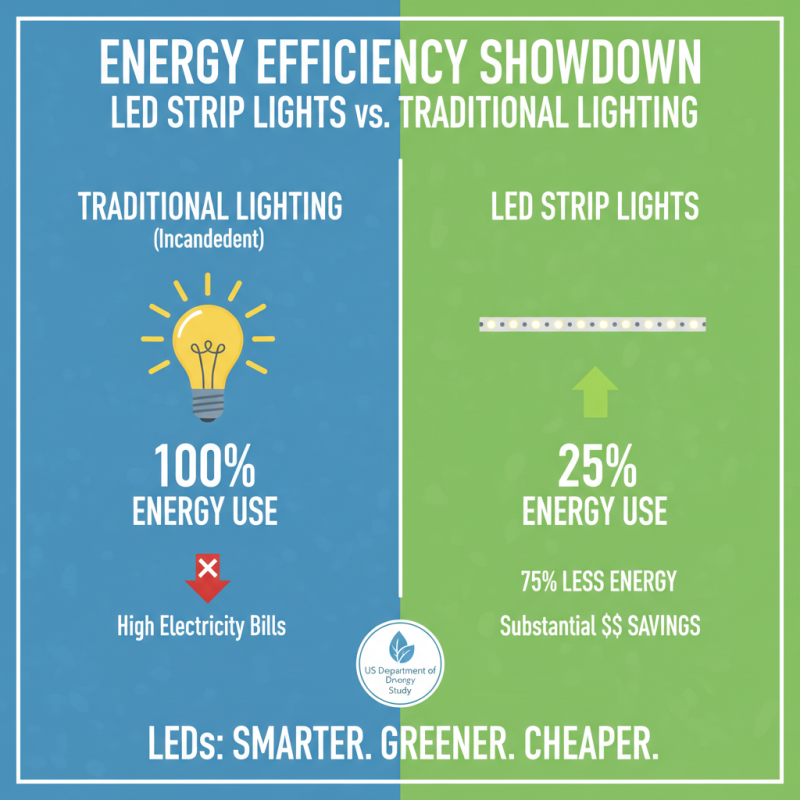
When it comes to lighting, energy efficiency is crucial. LED strip lights offer significant advantages over traditional lighting. A recent study by the U.S. Department of Energy found that LED lights use at least 75% less energy than incandescent bulbs. This efficiency translates to substantial savings on electrical bills, especially in commercial settings where lighting can be a major expense.
Moreover, LED strips have a longer lifespan. They can last up to 25,000 hours, whereas traditional bulbs often fail after just 1,000 hours. This means fewer replacements and less waste. Choosing LED lights not only benefits your wallet but also supports environmental sustainability. However, some users may still find the initial investment in LED lighting higher compared to traditional options, leading to hesitations that warrant further discussion.
Another aspect to consider is the quality of light. While LEDs can be less warm in tone, advancements in technology now offer a range of options. Users may need to experiment with different strips to achieve the desired ambiance. This journey toward optimal lighting can be frustrating, as not every LED strip delivers equal quality. Balance between energy savings and lighting style remains a key consideration for both homeowners and businesses.
Durability Standards: Weather Resistance Ratings for Outdoor LED Strips
When choosing outdoor LED strip lights, durability is a key factor. Weather resistance ratings play a vital role in ensuring that these lights can withstand various environmental conditions. Statistics show that LED products with an IP65 rating are protected against rain and dust, making them suitable for outdoor use. According to the Lighting Research Center, outdoor LEDs can last up to 50,000 hours, provided they meet rigorous durability standards.
The ability to resist extreme temperatures is also essential. LED strips designed for outdoor applications typically function well in temperatures ranging from -20°C to 50°C. However, not all products meet this standard. A recent study indicated that nearly 30% of outdoor-rated LED strips failed to maintain brightness after exposure to harsh climates. Ensuring a high-quality product often means looking beyond the initial purchase price.
Investing in reliable outdoor LED strips is crucial. They need to endure not only rain and snow but also UV exposure. Some products might claim weather resistance but lack proper testing. Consumers must be cautious and check for certifications that indicate adherence to industry standards. Choosing the right LED strip ensures safety and longevity, reducing the need for frequent replacements.
2026 Top Led Strip Lights Outdoor for Your Home or Business? - Durability Standards: Weather Resistance Ratings for Outdoor LED Strips
| Model |
Length (ft) |
Lumens per Foot |
Weather Resistance Rating |
Voltage (V) |
Warranty (Years) |
| Model A |
16 |
300 |
IP67 |
24 |
2 |
| Model B |
32 |
250 |
IP65 |
12 |
3 |
| Model C |
24 |
400 |
IP68 |
12 |
5 |
| Model D |
50 |
200 |
IP20 |
24 |
1 |
Installation Tips and Best Practices for Maximizing LED Strip Performance
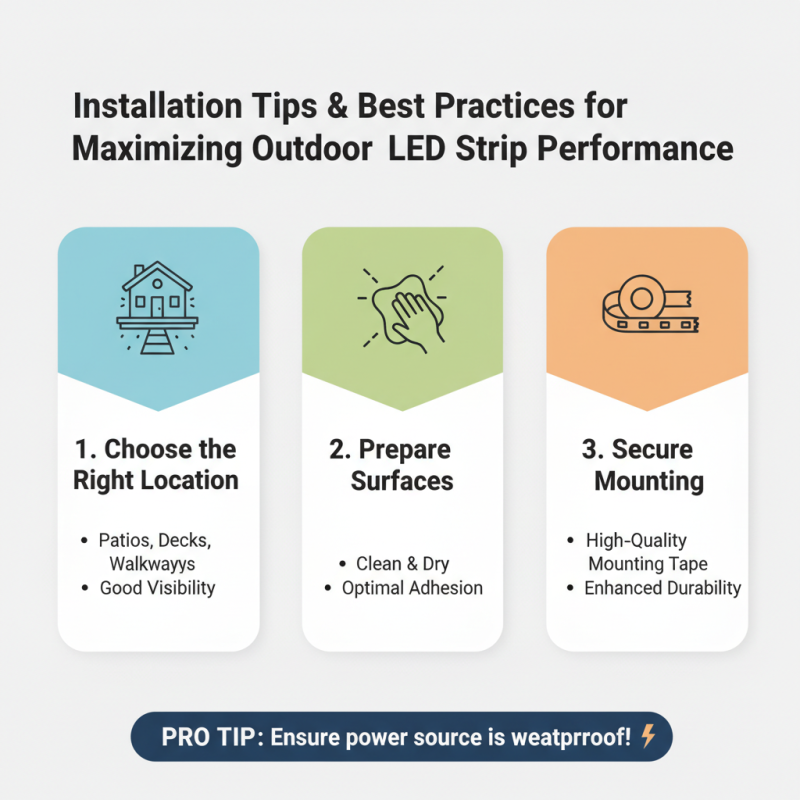
When installing LED strip lights outdoors, proper planning is essential. Start by choosing the right location. Consider areas with good visibility, such as patios, decks, or walkways. Ensure that the surfaces are clean and dry for optimal adhesion. Using high-quality mounting tape can also enhance effectiveness.
Power supply is another critical aspect. Make sure to choose waterproof connectors for outdoor use. An inadequate power supply can lead to flickering lights or even damage. It’s important to measure your strips before cutting them. Ensuring accurate lengths avoids wasted materials.
Sometimes, the installation may not go as planned. For instance, uneven surfaces can affect how well the strips stick. If issues arise, testing different adhesives may yield better results. Experimenting with light placements can create appealing effects. Remember that flexibility in installation allows for adjustments. Keep these practices in mind to maximize the performance of your LED strip lights.