Bathroom Vanity Lights do more than decorate a mirror. They help you see clearly while shaving, applying makeup, or checking small details before leaving home. Poorly placed fixtures can cast shadows beneath the eyes and chin. A bright bulb alone does not solve the problem.
Lighting designer Randall Whitehead is known for his work on residential lighting. A practical paraphrase of his lighting guidance—not a verified direct quotation—is: “Good light should help you see comfortably while making a room feel inviting.” That distinction matters. Vanity lighting needs to serve a task, but it should not feel harsh. A pair of fixtures beside the mirror can spread light across the face more evenly than one overhead source. The effect is easy to notice: fewer dark patches, clearer reflection. Small details count.
This article explores why Bathroom Vanity Lights matter, where to position them, and how brightness and color appearance shape daily routines. It also considers fixture style, room size, and moisture ratings. These choices depend on the mirror, the layout, and who uses the bathroom. There is no single perfect setup. Even a well-planned arrangement can feel different once the walls and finishes are in place. That is worth remembering. The aim is useful, comfortable light—not a showroom effect.
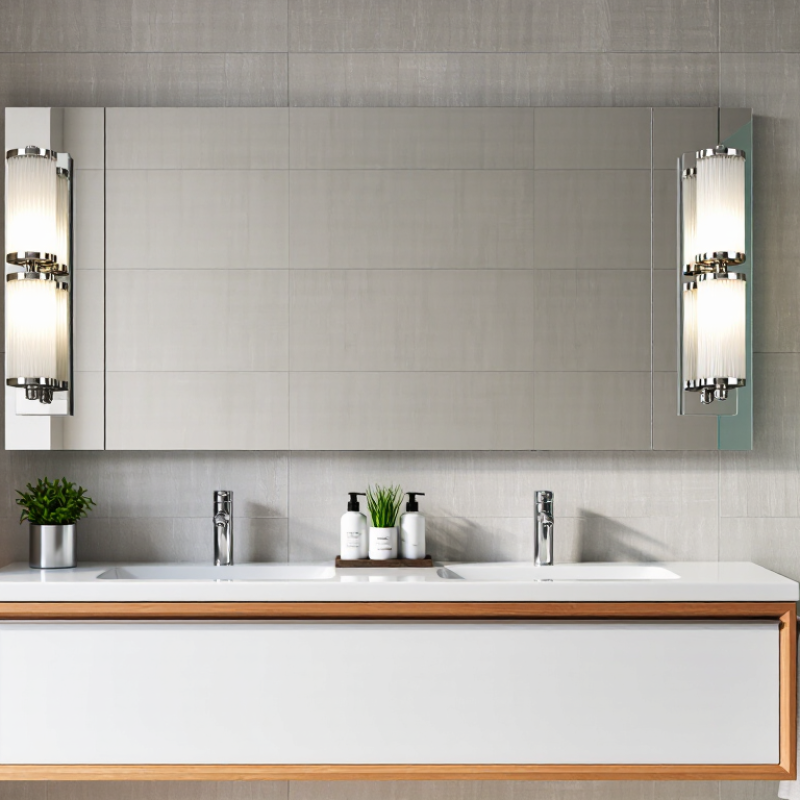
Bathroom vanity lights are fixtures designed to illuminate the face and mirror area. They are commonly mounted above a mirror or on either side. Their purpose is practical: provide steady light for shaving, makeup, and other close-up tasks. A ceiling light may leave shadows beneath the eyes or chin. Vanity lighting can soften those shadows when its position and spread are suitable.
Inside a fixture, electricity powers a bulb or an integrated LED light source. The fixture directs and diffuses that light through a shade, lens, or open design. Diffusion helps reduce harsh glare, though a dark or heavily tinted shade can make the mirror area dimmer.
Placement matters, too. Side-mounted lights near face height often illuminate both sides more evenly, while a single light above the mirror may cast downward shadows.
Small details count. A bulb’s color temperature affects whether the room feels warm or cool, and its color-rendering ability affects how skin tones appear. In a bathroom, choose fixtures rated for the moisture conditions where they will be installed. Brighter is not always better; an overly intense bulb can reflect sharply in the mirror. A useful setup balances clear facial light with comfortable brightness, though the best balance depends on the mirror, room, and user.

Bathroom vanity lighting affects how clearly you see your face during everyday routines.
A ceiling fixture alone often casts shadows beneath the eyes, nose, and chin. That uneven light can make shaving less precise or leave makeup looking different once you step outside.
Lights placed on both sides of the mirror usually illuminate the face more evenly. If side fixtures are not practical, a wide light above the mirror can help, provided it spreads light downward without creating glare.
Look for a color rendering index of 90 or higher when accurate color matters, especially for makeup and skincare. Keep the light near face level when possible.
Small details matter. A dimmer can make early mornings gentler, but very low brightness may hide small cuts or skin changes.
It is easy to focus on fixture style and overlook how the light falls on your face. Check the mirror from where you actually stand, not only from across the room. That quick test can reveal dark patches you might otherwise miss.
Even, well-placed bathroom lighting supports safer movement as well as grooming. A dark patch beside the sink can hide a wet tile edge, while a ceiling light alone may cast shadows across the face. Small details matter. The CDC estimated 234,094 emergency-department-treated, nonfatal bathroom injuries among U.S. residents aged 15 and older in 2008; falls accounted for about 81% of those injuries. The CDC’s analysis, published in 2011, did not establish that poor lighting caused these falls. Still, visibility deserves attention.
The Illuminating Engineering Society’s ANSI/IES RP-11-20 residential lighting guidance supports lighting suited to the activity. Place light beside both sides of a mirror, or use a broad, diffused fixture above it, to reduce facial shadows. Keep the switch easy to reach from the doorway, and check for glare reflected in the mirror or glossy tile. A night light can help. View the room from a seated position, too; children and people using mobility aids may encounter different shadows. More brightness is not always better: a poorly aimed lamp can flatten contrast and make standing water harder to see. Lighting cannot replace dry floors, secure grab bars, or regular maintenance.
A bathroom mirror can show every detail, but poor lighting can distort what you see. A single ceiling fixture often casts shadows beneath the eyes, nose, and chin. This makes shaving, applying makeup, or checking skin harder than it needs to be. Light placed on both sides of the mirror usually spreads more evenly across the face. Keep fixtures near face height when the layout allows, and avoid relying on a bright bulb directly overhead.
Color matters, too. A lipstick shade that looks soft under warm light may seem much brighter near a window. For everyday grooming, choose vanity lighting with consistent color rendering; a CRI of 90 or higher is a useful benchmark, though it cannot guarantee a perfect match. Neutral white light often gives a practical balance, while very cool light can make skin appear washed out. Small differences show up quickly.
Comfort is easy to overlook. Harsh glare can make a morning routine feel tiring, especially in a compact bathroom with pale tile and reflective surfaces. A dimmer lets you lower the brightness at night and raise it for detail work. Even then, no bathroom light reproduces daylight exactly. Check important color choices near a window when possible; I would not trust one mirror alone.
| Lighting factor | Practical guidance | How it affects comfort and color |
|---|---|---|
| Color temperature | Choose a consistent color temperature. Around 2700–3000 K gives a warm appearance; around 3000–3500 K gives a more neutral appearance. | A suitable tone can feel comfortable for everyday routines. Keeping nearby lights similar in color temperature helps avoid a visibly mixed-color look. |
| Color rendering (CRI) | Look for a high Color Rendering Index (CRI); CRI 90 or higher is a common choice when faithful color appearance is important. | Higher-CRI light can make skin tones, makeup, and clothing colors appear closer to how they look under a reference light. CRI is a general measure, not a guarantee that every color will look identical. |
| Light direction | Use light that reaches the face from both sides of the mirror, or choose a broad, well-diffused fixture near the mirror. | Light spread across the face can reduce harsh shadows compared with relying on a single overhead source, helping with shaving, skincare, and makeup. |
| Diffusion and glare | Prefer diffused light and position fixtures to limit direct glare in the mirror and in the user's line of sight. | A softer, more comfortable view can make close-up tasks easier without an exposed bright source distracting the user. |
| Brightness and dimming | Choose enough light for detailed tasks and consider dimming where the fixture and dimmer are compatible. | Adjustable brightness lets users set a brighter level for grooming and a gentler level for other times. Perceived brightness also depends on the room, mirror, and surface finishes. |
| Light consistency | Where possible, use lamps with matching color temperature and similar color-rendering quality around the vanity. | Consistent light helps colors appear more uniform across the mirror area and reduces distracting differences between fixtures. |
| Layered lighting | Combine vanity lighting with appropriate general room lighting rather than expecting one fixture to serve every purpose. | A balanced room can feel more comfortable and reduce strong contrasts between the bright mirror area and darker surroundings. |
Note: These are general selection guidelines. The appearance of light and color varies with the specific lamp, fixture, mirror, room surfaces, and existing lighting.
Bathroom vanity lights do more than illuminate a mirror; they shape color, contrast, and the room’s sense of space.
Light placed on both sides of a mirror can fall more evenly across the face than light from one overhead source. An overhead fixture alone may leave shadows beneath the eyes and chin. That can make a compact bathroom feel less welcoming. Warm light can soften cream tile and wood, while cooler light can make white surfaces appear sharper. Tiny changes matter.
For everyday grooming, choose bulbs with a strong color-rendering rating; CRI 90 or higher is a useful benchmark, not a guarantee. The result also depends on wall color, daylight, and glossy surfaces, so check the lighting in the room when possible. A sample that looked balanced in a showroom may feel glaring beside a pale mirror at home. Glare matters. A dimmer makes it easier to shift from bright morning light to a calmer evening mood. Mount fixtures near face height when the layout allows, and try to reduce direct glare in the mirror. Measurements vary with mirror size and user height; one placement rule will not suit every bathroom.