Leave Your Message

2026 Best LED Home Lights for Global Buyers?

Choosing the best Home Light Led products in 2026 requires more than comparing brightness and price. Global buyers must examine efficiency, color accuracy, heat control, smart compatibility, and long-term reliability. A beautiful lamp can still disappoint when its driver flickers, its plug fits poorly, or its warranty excludes overseas repairs.

Dr. Mariana Figueiro, a leading lighting researcher and director of the Light and Health Research Center, has stated, “Light is the strongest cue for the circadian system.” Her observation matters in bedrooms, offices, and family spaces. Warm light around 2700K can create a calmer evening atmosphere. Neutral light near 4000K may support kitchens and work areas. High CRI ratings can also make food, fabrics, and skin tones appear more natural. Small details matter.

This guide explores the 2026 best LED home lights for global buyers through practical testing criteria. We consider lumen output, wattage, flicker performance, dimming behavior, ingress protection, voltage range, and regional certifications. We also examine packaging, installation clarity, app privacy, and replacement support. Those details are easy to overlook.

Not every premium product deserves its price. Some budget models perform surprisingly well. Others hide weak components behind impressive specifications. Real homes are unpredictable. A lamp may run hotter than expected, or a smart feature may become useless after an app update. Buyers should question polished claims, compare independent evidence, and choose lighting that remains dependable beyond the first month. That is the standard this review aims to apply.

2026 Best LED Home Lights for Global Buyers?

LED Home Lighting Basics and Key Benefits for Global Buyers

2026 Best LED Home Lights for Global Buyers?

LED home lighting starts with three practical details: brightness, color temperature, and electrical compatibility. Lumens show light output more accurately than watts. Warm white, around 2700–3000K, suits bedrooms and living rooms. Neutral white, near 4000K, works well in kitchens and study areas. Cool white can feel harsh in homes, although some buyers prefer it.

LED lights use less electricity than traditional bulbs and usually last much longer. They also produce less heat during daily use. A high color rendering index helps fabrics, food, and wall colors look more natural. For global buyers, check the local voltage, socket type, dimming system, and safety certification before ordering. A product may be excellent, yet unsuitable for a different electrical standard. That mistake is easy to make.

Tips: Measure the room before choosing fixtures. Small rooms need fewer lumens. Look for clear warranty terms and tested safety information. In humid bathrooms, choose suitable moisture protection. Remote controls and smart features can be useful, but they may add setup problems. I have found that simple controls often remain more reliable. Packaging waste also deserves attention; recyclable materials are a better practical choice. LED lighting is efficient, but it is not automatically the best choice without careful matching.

Types of LED Home Lights and Their Best Indoor Applications

2026 Best LED Home Lights for Global Buyers

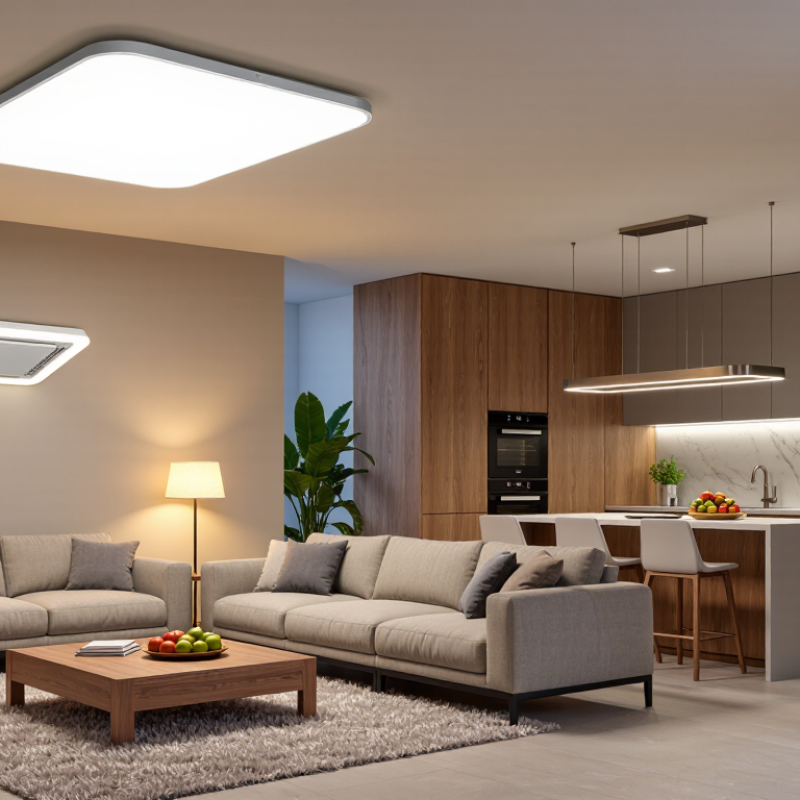
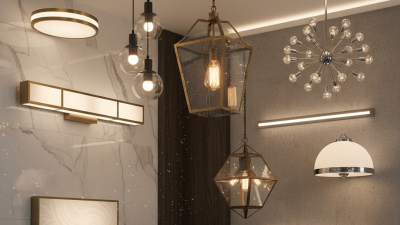
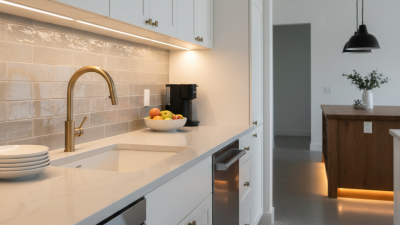
LED home lighting works best when each type serves a clear indoor purpose. Recessed downlights provide even ceiling coverage in kitchens, hallways, and bathrooms. Flush-mount fixtures suit low ceilings and create comfortable ambient light. Pendant lights focus attention above dining tables or kitchen islands. Wall sconces add softer layers beside beds, mirrors, and artwork. Under-cabinet strips reduce shadows on countertops. They are small but useful.

Choose light output by room size, not appearance alone. Living rooms often need warm white light between 2700K and 3000K. Work areas may benefit from neutral white light near 3500K to 4000K. A high color-rendering index helps food, fabrics, and skin look more natural. In bathrooms, check moisture protection ratings carefully. Dimming compatibility also matters, because some LED fixtures flicker with unsuitable controls. I have found that overly bright bedrooms feel less relaxing, even when the room looks modern. Personal comfort can be overlooked.

Tips: Place ambient, task, and accent lights on separate circuits when possible. Test the color temperature at night before installing many fixtures. Keep glare away from screens and mirrors. For small rooms, use brighter walls and fewer powerful lamps. Measure the ceiling height first. It prevents awkward replacements later. Also, verify local voltage and wiring requirements with a qualified electrician.

How to Compare Brightness, Color, Efficiency, and Lifespan

Choosing the best LED home light in 2026 requires more than comparing wattage. Brightness is measured in lumens, while lux shows how much light reaches a surface. A 1,000-lumen lamp may feel bright in a small bedroom but weak above a kitchen counter. Check the beam angle, room size, and mounting height. For reading areas, measure the desk surface, not only the package rating.

Color affects comfort and visibility. Warm white, around 2700K to 3000K, suits bedrooms and living rooms. Neutral white, near 3500K to 4000K, often works better in kitchens and offices.

Color rendering also matters. A CRI of 80 is acceptable, while 90 or higher can show food, skin, and fabric more naturally. I once treated color temperature as a minor detail. That was a mistake. A bright lamp can still make a room feel cold.

Efficiency should be compared through lumens per watt, not watts alone. Look for independent test data, thermal performance, and the L70 lifespan rating. L70 means the light may retain about 70% of its original output. Heat is a quiet problem. Poor ventilation can shorten real service life, even when the package claims 25,000 hours. Check voltage compatibility, safety certification, dimmer support, and warranty terms for your market. Specifications help, but actual room conditions can disagree. That uncertainty deserves attention.

Safety Standards, Voltage Compatibility, and Regional Certifications

2026 Best LED Home Lights for Global Buyers?

Choosing LED home lights for international use requires more than checking brightness and color temperature. The safety label should identify input voltage, frequency, rated power, and the applicable product standard. Look for testing aligned with IEC 60598 for luminaires and relevant driver requirements. A clear electrical diagram also helps installers avoid mistakes.

Voltage compatibility is critical. A fixture marked 100–240V and 50/60Hz may suit many regions, but the plug, dimmer, and wall switch still need checking. Some homes use 120V systems, while others use 220–240V supplies. A mismatch can cause overheating, flicker, or early failure. I would also inspect the driver’s temperature rating, cable insulation, and grounding method. Small details matter.

Regional certification should match the destination market, not merely the factory location. European shipments may require CE compliance, while products for Great Britain may need UKCA requirements. North American buyers often check recognized safety certification, such as UL or equivalent approval. Other markets may request local registration or energy labels. Requirements can change, so official government or certification databases are more reliable than sales descriptions.

IP ratings are useful in bathrooms and outdoor areas, but they do not prove complete safety. An IP44 light may resist splashes, yet it is not designed for direct rain. Flicker claims also deserve caution; packaging often gives limited test information. A careful buyer should request test reports, declaration documents, and installation instructions. I may still miss a regional detail, because standards are not perfectly uniform. That is precisely why local electrical advice remains valuable.

2026 Best LED Home Lights for Global Buyers? — Safety Standards, Voltage Compatibility, and Regional Certifications
Market / Region Typical Residential Supply Common Lamp and Fixture Types Key Safety and Performance References Regional Compliance Marking or Documentation Recommended Buyer Checks
Regional Selection Guide
United States 120 V AC, 60 Hz LED replacement lamps, downlights, ceiling fixtures, under-cabinet lights, smart luminaires IEC 60598-1 or applicable national equivalent for luminaires;
IEC 61347-1 and IEC 61347-2-13 principles for LED controlgear;
IEC 62471 principles for photobiological safety;
applicable energy-efficiency requirements
UL Listed ETL Listed FCC Part 15
FCC Part 15 is generally relevant to products containing digital or radio electronics; it is not a substitute for electrical safety certification.
Confirm the product is rated for 120 V, check whether the certification covers the complete fixture, and verify dimmer compatibility. For damp or wet locations, look for an appropriately marked enclosure rating.
Canada 120 V AC, 60 Hz LED bulbs, recessed lights, linear fixtures, bathroom and kitchen luminaires Canadian Electrical Code requirements as adopted by the applicable authority;
recognized electrical safety standards for the product category;
electromagnetic compatibility requirements where applicable
CSA cUL cETL
The mark should be issued by a certification body recognized for the relevant Canadian scope.
Check for a Canadian-recognized certification mark rather than relying only on a general “CE” claim. Verify 120 V operation, installation method, and suitability for cold or damp environments.
European Union / EEA 220–240 V AC, 50 Hz LED lamps with E27, E14, GU10, and other standardized bases; integrated ceiling and wall luminaires EN 60598 series for luminaires;
EN 61347 series for lamp controlgear;
EN 62471 for photobiological safety;
EMC and low-voltage safety requirements;
applicable ecodesign and energy-labelling rules
CE RoHS WEEE
CE is the manufacturer’s declaration of conformity under applicable EU legislation; it is not the same as independent third-party certification.
Confirm 220–240 V, 50 Hz compatibility, the correct lamp base, declared lumen output, color temperature, power factor where relevant, and whether the product is dimmable with the intended control.
United Kingdom 220–240 V AC, 50 Hz LED bulbs, pendant lights, downlights, bathroom fittings, integrated smart fixtures Applicable UK electrical safety, EMC, and restricted-substance requirements;
BS EN versions of relevant lighting standards;
ingress protection requirements for bathroom and outdoor installations
UKCA CE
CE marking continues to be accepted for many regulated products in Great Britain under current transitional arrangements, subject to applicable government rules and product category.
Confirm the current marking requirement for the product category and destination, check 230 V nominal compatibility, and verify that bathroom or outdoor products have the required IP rating and installation instructions.
Australia / New Zealand 230–240 V AC, 50 Hz LED lamps, downlights, battens, outdoor luminaires, low-voltage systems with drivers AS/NZS 60598 series for luminaires;
AS/NZS requirements for lamps and controlgear where applicable;
electrical safety and electromagnetic compatibility rules
RCM
The Responsible Supplier registration and supporting compliance records are important for regulated electrical equipment.
Check the RCM pathway, product registration status where applicable, 230–240 V suitability, plug or hard-wiring requirements, and whether installation must be performed by a licensed electrician.
Japan 100 V AC, 50 or 60 Hz depending on area LED bulbs, ceiling lights, pendant fixtures, task lights, compact residential luminaires Japanese electrical safety requirements for the specific product category;
applicable JIS or adopted international lighting standards;
radio and EMC requirements for wireless or digital products
PSE Giteki
PSE applies to designated electrical products within its scope. Giteki marking is relevant to specified radio equipment.
Confirm 100 V operation and frequency suitability. Wireless products should include the required Japanese radio certification, and ceiling fixtures should match the local mounting and connector system.
China Mainland 220 V AC, 50 Hz LED bulbs, ceiling fixtures, panel lights, strip-light power supplies, smart luminaires Applicable GB standards for LED lamps, luminaires, controlgear, EMC, and electrical safety;
photobiological safety requirements where applicable;
energy-efficiency rules for regulated product categories
CCC RoHS
CCC requirements depend on whether the particular lighting product is within the compulsory certification catalogue.
Verify whether the exact product category requires CCC, check 220 V compatibility, and request Chinese-language safety instructions and test documentation when required for local distribution.
Gulf Cooperation Council Markets Generally 220–240 V AC, 50 Hz LED bulbs, floodlights, ceiling fixtures, outdoor luminaires, smart lighting products Applicable national electrical safety and EMC rules;
IEC or Gulf technical regulations for lamps and luminaires;
thermal and ingress protection evaluation for hot or dusty environments
G-Mark
Requirements vary by product category and destination country; national import and conformity procedures may also apply.
Check the destination country’s conformity route, select products with suitable ambient-temperature ratings, and verify IP protection, surge resistance, UV resistance, and cable or plug compatibility.
India 230 V AC, 50 Hz LED lamps, downlights, street and outdoor products, ceiling fixtures, LED drivers Applicable Indian Standards for self-ballasted LED lamps, luminaires, drivers, electrical safety, and EMC;
Bureau of Indian Standards requirements where covered by a compulsory registration or certification scheme
BIS CRS
The exact registration or certification requirement depends on the product category and current Indian regulations.
Confirm 230 V suitability, BIS or CRS status where required, surge protection for unstable supply conditions, driver replacement availability, and heat management for recessed installations.
Universal Technical Criteria for Comparing LED Home Lights
Electrical Input Choose the correct nominal voltage and frequency for the destination market. A product marked “100–240 V AC, 50/60 Hz” is designed for a broad mains range, but this marking alone does not prove regional safety certification or plug compatibility. Do not connect a 120 V-only product to a 220–240 V supply. A voltage converter does not correct an unsuitable certification, socket type, dimmer, or installation method.
Ingress Protection IP20 is generally for dry indoor areas; higher ratings are used where protection from moisture or dust is needed. Select the IP rating according to the installation location. Bathroom zones, exterior walls, balconies, kitchens, and covered outdoor areas may require specific national installation rules in addition to the product’s IP marking. Never infer water safety from a product described only as “outdoor style.” Check the complete IP code, installation orientation, cable entry, and manufacturer instructions.
Photobiological Safety Relevant to high-output, narrow-beam, tunable-white, and some specialty LED products. IEC 62471 evaluates optical radiation risks such as blue-light hazard according to product characteristics and exposure conditions. For bedrooms, children’s rooms, offices, and task lighting, prefer comfortable glare control, diffusers, suitable beam angles, and documented photobiological assessment where relevant.
Thermal Management LED lifetime is strongly affected by junction temperature and enclosure design. Enclosed fixtures, recessed housings, high ambient temperatures, and poor ventilation can reduce light output and service life even when the electrical rating is correct. Check the permitted ambient temperature, enclosed-fixture suitability, heat-sink design, and driver location before installation.
Lighting Performance Compare lumens rather than watts; consider color temperature, color rendering, beam angle, and lumen maintenance. Common residential color temperatures include approximately 2700–3000 K for warm white, 3500–4100 K for neutral white, and 5000–6500 K for cool or daylight white. For general home use, CRI 80 or higher is a common baseline; CRI 90 or higher is preferable where accurate color appearance matters, such as kitchens, dressing areas, and artwork.
Controls and Compatibility Dimming, motion sensors, smart hubs, and electronic transformers can affect performance. “Dimmable” is not universal. Compatibility depends on the dimmer type, minimum load, driver design, control protocol, and wiring arrangement. Request a compatibility list or test the exact lamp-and-dimmer combination. For wireless products, check regional radio requirements and supported frequency bands.
Documentation A responsible global supplier should provide traceable technical information. Useful documents include a declaration of conformity, test reports from a competent laboratory, installation instructions, electrical ratings, photometric data, IP test information, and warranty terms. Match the model number on the product, packaging, certificate, and test report. Avoid relying on generic certificates that do not identify the exact product family or electrical configuration.

Smart Features, Installation Needs, Pricing, and Buying Criteria

2026 Best LED Home Lights for Global Buyers?

Smart LED lighting now goes beyond brightness and color. Buyers should check dimming range, motion sensing, scheduling, and voice-control compatibility.

According to the U.S. Department of Energy, LEDs use at least 75% less energy than incandescent lamps and can last up to 25 times longer.

That advantage matters in hallways, kitchens, and outdoor areas used every night.

Installation still decides the real cost.

Confirm the local voltage, socket type, dimmer compatibility, and whether a neutral wire is required. Older homes may need rewiring or professional installation.

Smart lamps often need a stable 2.4 GHz Wi-Fi signal, while hub-based systems can reduce network traffic.

The International Energy Agency reports that lighting represents about 15% of global electricity consumption, so small efficiency gains can scale across a household.

Check the details.

Pricing needs a wider view.

A basic LED bulb may cost only a few dollars, while a connected fixture can cost several times more before installation. Energy Star guidance indicates certified LEDs generally last 15 to 25 times longer than incandescent bulbs.

However, software support, replacement parts, and subscription features can change the calculation. I have seen buyers overpay for novelty.

A warm 2700K lamp, accurate color rendering, and simple scheduling may deliver more daily value than complex effects.

Report sources: U.S. Department of Energy, Solid-State Lighting; International Energy Agency, Lighting; Energy Star, Light Bulbs.