How to Choose the Right Led Ceiling Light for Your Home?
Choosing the right LED ceiling light for your home can be challenging. The lighting industry has grown significantly in recent years. According to a report by Research and Markets, the global LED lighting market is projected to reach $100 billion by 2025. This reflects an increasing preference for energy-efficient solutions.
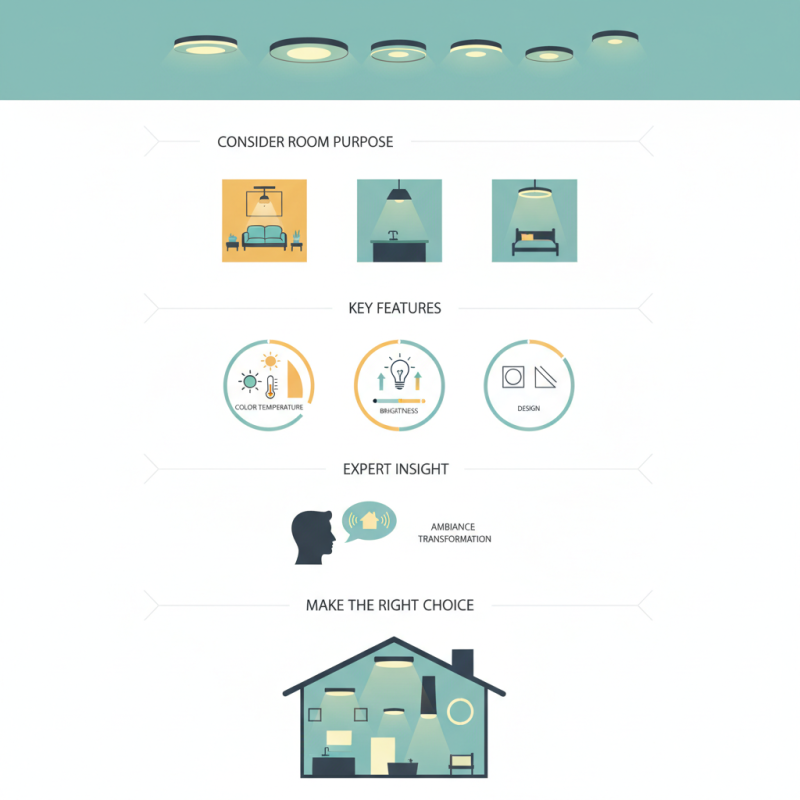
Expert David Johnson, a seasoned lighting designer, emphasizes, "The right LED ceiling light transforms the ambiance of any room." His insights highlight the essential role that lighting plays in interior design. Homeowners often overlook how the correct light can enhance functionality and aesthetics.
Many consumers feel overwhelmed by the options available. The variations in brightness, color temperature, and design can make selection difficult. It's crucial to consider the purpose of the room, as well as personal style. Reflecting on these choices can lead to a more satisfying lighting experience. Always remember, the right LED ceiling light is not just about brightness; it's about creating the desired atmosphere in your home.
Understanding the Different Types of LED Ceiling Lights Available
When selecting LED ceiling lights for your home, it's essential to understand the various types available.
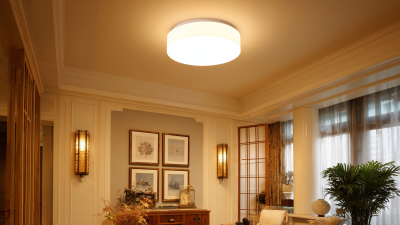
Flush mount lights are popular for low ceilings, offering a sleek profile. They can brighten up a space without overwhelming it.
On the other hand, pendant lights vary in style and can be used to create a focal point in a room. Their hanging design adds depth and visual interest.
Recessed lighting is another option. This type is installed into the ceiling, providing a clean look. It's perfect for modern designs, but careful placement is key.
Too many fixtures may create an overly bright environment. Choosing the right lumens is crucial here; too bright can hurt the eyes.
Track lights are versatile and adjustable. You can direct the beams to highlight specific areas or artwork. However, they might not fit every design aesthetic. Not everyone appreciates their industrial look.
Understanding your space and style is vital for making the right choice. Reflect on how each type would function in your home.
Each option has its strengths and weaknesses, requiring thoughtful consideration.
Key Factors to Consider When Selecting LED Ceiling Lights
Choosing the right LED ceiling light involves several key factors. One of the most critical aspects is the brightness level. Consider the lumen output, as this determines how bright the light will be in your space. A common recommendation is around 100 lumens per square meter for general lighting. This can vary depending on the room’s purpose.
Another factor is the color temperature. This is measured in Kelvins (K). Warmer lights (around 3000K) suit cozy areas like bedrooms and living rooms. Cooler lights (above 5000K) work well in task-oriented spaces, such as kitchens. Identifying the right color scheme can significantly impact the room's ambiance and functionality.
Tip: Test different light colors in your space before making a final decision.
Energy efficiency is also vital. LED lights use significantly less energy compared to traditional incandescent bulbs, reducing electricity bills by up to 80%, according to the U.S. Department of Energy. However, not all LED lights are equally efficient. Sometimes cheaper options may compromise lifespan or effectiveness.
Tip: Research lifespans and energy ratings from reliable sources before purchase.
The design of the fixture should complement your home style. It can be easy to overlook this detail, but the right lighting can elevate a room's aesthetic. Consider the size, shape, and finish of the fixture. Remember, it's okay to feel overwhelmed by choices. It’s a reflection of the many styles available today.
Assessing the Size and Layout of Your Room for Proper Lighting
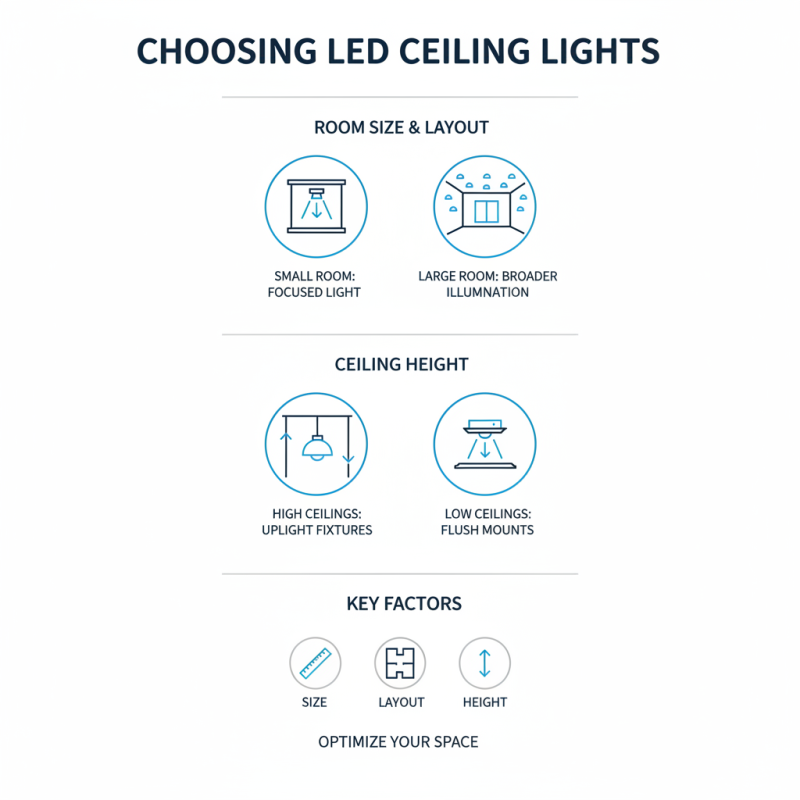
When choosing the right LED ceiling light, the size and layout of your room are key factors. A small room requires focused light, while larger spaces can handle broader illumination. Consider the height of your ceiling. A room with high ceilings may need fixtures that draw the eye upward. Conversely, low ceilings benefit from flush mounts that do not invade the space.
Tips: Measure your room before buying a light. This will help you visualize where the light will fit. If a light fixture is too large, it can overwhelm a small area. For open floor plans, use multiple fixtures to create even lighting throughout.
Lighting design isn't just about aesthetics. You may feel overwhelmed when selecting the right fixture. Take time to think about how you use the room. Are there areas that need more light? Remember, shadows can create an unwelcoming atmosphere. Experiment with different lamp heights to find what feels right.
Tips: Don’t hesitate to change fixture types if needed. Sometimes, you don’t realize what works until you try it. Lighting affects mood and functionality, so find what feels balanced and right for you.
Energy Efficiency Ratings and Their Importance in LED Lighting
When it comes to LED ceiling lights, energy efficiency ratings play a crucial role. These ratings indicate how effectively a fixture converts electricity into light. Choosing options with higher ratings can result in lower energy bills. It’s essential to understand these numbers before making a purchase. Many designs look appealing but may lack efficiency.
Consider the lifespan of your LED lights, too. Higher ratings often correlate with longer lifespans. This means less frequent replacements and less waste. However, some fixtures that are highly efficient may come with higher initial costs. While the upfront investment can be daunting, the savings over time can be significant.
Not all homes are the same, and lighting needs vary. An energy-efficient light in one room may not work for another. Factors like room size, natural light, and purpose all matter. It's easy to overlook these details, but they can greatly affect your overall satisfaction. You might end up with lights that don’t provide enough brightness. Reflect on how each space is used and let that guide your choices.
Aesthetic Choices: Matching LED Ceiling Lights to Your Home Decor
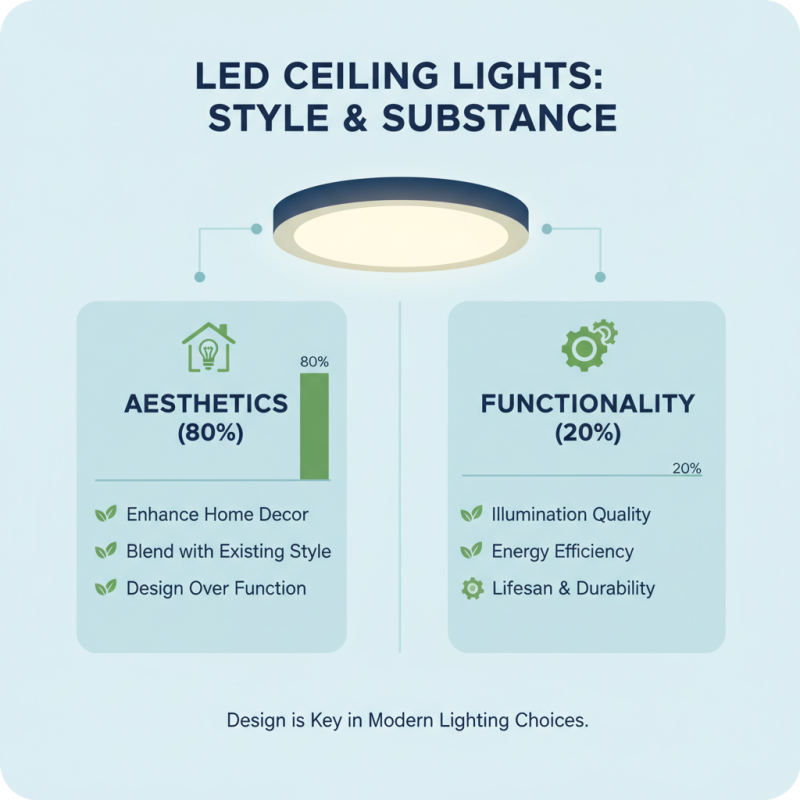
Choosing the right LED ceiling light can dramatically enhance your home's aesthetic. When selecting lights, consider how they blend with your existing decor. A recent report indicates that around 80% of homeowners prioritize design over functionality when lighting their spaces. This highlights the importance of aesthetics in LED lighting choices.
Consider the color temperature of the lights. For a warm and inviting atmosphere, choose lights with a lower Kelvin rating. A soft white light can create a cozy vibe in living rooms and bedrooms. In contrast, cooler lights suit kitchens and bathrooms, promoting a clean, modern look. Matching styles is crucial. For instance, a minimalist design may clash with ornate fixtures.
Placement matters too. A well-placed LED ceiling light can draw attention to artwork or architectural features. It's also worth noting that improper sizing can disrupt the visual balance of a room. Oversized fixtures in small rooms can feel overwhelming. Conversely, tiny lights in expansive areas may become lost. Aim for harmony. Aim for a coherent theme throughout your home with thoughtful lighting selections.