Top 10 Tips for Choosing the Best Tube Light for Your Needs?
When it comes to selecting the right tube light, expert insights can guide the process effectively. John Smith, a leading figure in the lighting industry, emphasizes, "The right tube light can transform your space and energy efficiency." This highlights the importance of making informed choices. Tube lights are popular for their versatility, illuminating spaces ranging from homes to offices.
Understanding your specific needs is crucial. Consider factors like size, brightness, and energy consumption. The market offers an array of options, but not all tube lights are created equal. Some may flicker or consume more power than necessary, leading to frustration.
Selecting a tube light requires careful thought. Each setting demands different features. Standard designs may not meet individual requirements. Reflecting on your space and personal preferences can lead to a more satisfying purchase. An ideal tube light should enhance your environment, making it feel welcoming and functional. The right choice is imperative for both aesthetics and efficiency.
Understanding Different Types of Tube Lights Available in the Market
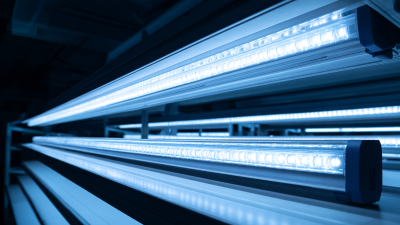
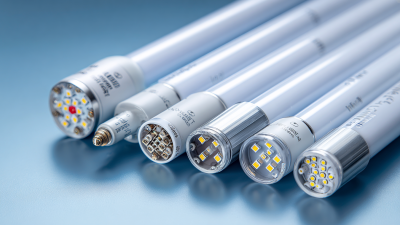
When choosing tube lights, understanding the different types available is crucial. There are various styles, including LED, fluorescent, and halogen tube lights. LED tube lights are gaining popularity due to their energy efficiency, offering up to 80% energy savings compared to traditional fluorescent options. According to the U.S. Department of Energy, LEDs also have a longer lifespan, lasting up to 25,000 hours.
Fluorescent tube lights provide a wide color range and are often used in commercial settings. However, they contain mercury, making disposal tricky. Halogen lights are bright but consume more power and have shorter lifespans. Consumers should weigh these factors carefully based on their lighting needs.
Tip: Determine where you'll install the tube lights before purchasing. Many people overlook the amount of natural light in the space. Another tip is to consider the color temperature, as it impacts mood. A cooler temperature is ideal for workspaces, while warmer tones suit relaxation areas. Evaluate your space's requirements to ensure you choose the best option for your needs. Remember, selecting the right tube light goes beyond just brightness; it influences your environment significantly.
Evaluating Brightness Levels and Color Temperatures for Tube Lights
Choosing the right tube light involves understanding brightness levels and color temperatures. Light output is measured in lumens. Higher lumens provide brighter illumination. A report from the Lighting Research Center indicates that for general use, 800–1,200 lumens is typically sufficient.
When selecting color temperatures, the Kelvin scale is key. Warmer white lights (2700K–3000K) create a cozy atmosphere, while cooler white lights (4000K–5000K) are ideal for more focused tasks. According to research by the U.S. Department of Energy, cooler temperatures can enhance visibility and concentration in work areas.
Tip: Assess the purpose of your lighting. If you need a romantic ambience, choose warmer lights. For detailed work, opt for cooler temperatures. Experiment with different styles to see what feels best. Sometimes, personal preference can conflict with optimal lighting choices. Reflect on what truly works for you.
Assessing Energy Efficiency Ratings and Lifespan of Tube Lights
When selecting tube lights, energy efficiency is a crucial factor.
The U.S. Department of Energy reports that
LED tube lights consume up to 75% less energy
than traditional fluorescent options. This can lead to significant savings on electricity bills over time.
Additionally, the lifespan of tube lights varies greatly. LEDs typically last 15,000 to 50,000 hours,
whereas fluorescent tubes range from 7,000 to 15,000 hours. This means that choosing LED lights not only minimizes energy consumption
but also reduces the frequency of replacements.
Understanding energy efficiency ratings can feel overwhelming. Common metrics include
lumens per watt (lm/W)
and Energy Star certifications. For instance, a tube light with 100 lm/W is more efficient
than one with only 50 lm/W. This
nutritional value of light highlights the importance of comparing products.
Moreover, some users may overlook initial costs, focusing solely on savings. However,
long-term efficiency should be a priority.
Choosing the right tube light involves careful consideration of both energy efficiency
and lifespan. It's essential to assess your specific needs. While one option may seem more appealing initially, reflecting
on maintenance and replacement costs is vital. The upfront price can mislead users about long-term value.
A thorough evaluation of these factors will ensure you select the best light for your circumstances.
Choosing the Right Size and Shape for Your Space Requirements
When choosing tube lights, size and shape are critical
to meet your space requirements. Measure your area carefully.
Consider the dimensions of the
installation location. A slim tube light may work well in tight spaces, while larger
rooms benefit from broader lights that distribute brightness evenly.
Think about the lighting effect you want to
achieve. For example, a long, linear tube can create a modern look above a
kitchen counter. Meanwhile, shorter tubes can serve as accents in smaller rooms.
This decision can affect the ambiance, making a room feel
cozy or spacious.
Reflect on the purpose of the lighting. Will it
be for task lighting, accent lighting, or general illumination? Each role demands
different sizes. A misjudged size can lead
to an awkward feel in the space. It is vital to find a balance that fits your
aesthetic and functional needs.
Considering Additional Features and Installation Options for Tube Lights
When choosing tube lights, considering additional features and installation options is essential. Many users overlook the importance of brightness and color temperature. For instance, reports indicate that 50% of consumers prefer 4000K to 5000K for a natural white light ambiance in workspaces. Speaking of installation, some tube lights offer easy plug-and-play options. It’s worth noting that not all models fit every fixture, which can lead to frustrating installation experiences.
Beyond brightness, energy efficiency plays a vital role. According to industry estimates, LED tube lights consume up to 50% less energy compared to traditional fluorescent tubes. This reduction can significantly lower utility bills. However, you should be cautious of models lacking proper efficiency ratings. Additionally, consider the lifespan of the product. While many LED tubes last over 20,000 hours, some cheaper alternatives may fail much sooner, leading to unexpected replacement costs.
Moreover, pay attention to dimming options. Some tube lights support dimmable features, providing flexibility in different environments. However, not every dimmable model works with standard dimmer switches. This oversight can be a source of disappointment after installation. Reflecting on these factors can help ensure that the chosen tube lights truly meet your needs.