Leave Your Message

Top COB LED Strip Lights for Global Buyers

Choosing the right Cob Led Strip can feel simple until installation begins. A showroom sample may look impressive, yet performance depends on voltage, color temperature, brightness, heat control, and adhesive quality. Global buyers also face different project conditions, including humid bathrooms, narrow display cases, outdoor signs, and long commercial ceilings. The best product is not always the brightest one. It should match the space, power system, control method, and expected operating hours.

This guide examines leading COB LED strip lights through practical buying criteria. It considers continuous illumination, LED density, color rendering, cutting points, flexibility, aluminum profiles, and thermal management. A strip with high CRI can make wood, clothing, and food displays appear more natural. However, specifications alone can mislead. Real testing matters. Touching an operating strip after several hours may reveal heat that a product page never mentions. Checking a sample under the intended dimmer can expose flicker or uneven color. Small details matter.

Reliable suppliers should provide clear data sheets, consistent color bins, sample testing, packaging information, and responsive technical support. Buyers should also verify suitable certifications and installation requirements for their destination market. This is not a perfect checklist. Product batches can vary, and adhesive performance may weaken on dusty or uneven surfaces. Even experienced installers sometimes underestimate power-drop issues. Careful measurement, proper connectors, and a suitable aluminum channel reduce these risks. The following overview helps international purchasers compare COB LED strip options with greater confidence, while recognizing that every project still needs informed judgment.
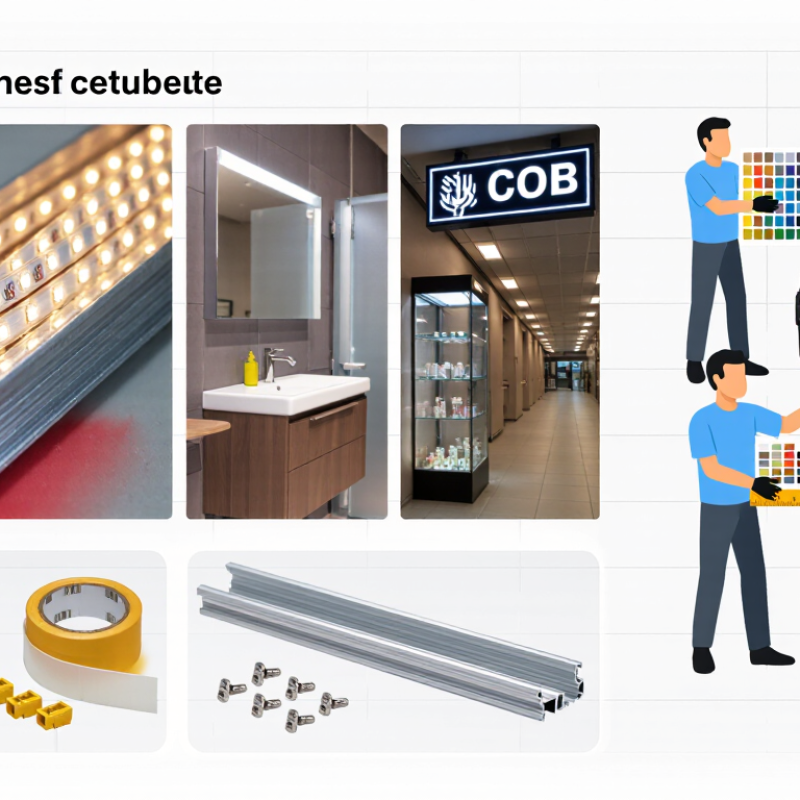
Top COB LED Strip Lights for Global Buyers

COB LED Strip Light Technology and Key Performance Features

Top COB LED Strip Lights for Global Buyers

COB LED strip technology places many small LED chips directly on a flexible circuit board. This creates a continuous light line, with fewer dark spots than traditional SMD strips. The effect is valuable under shelves, handrails, and shallow aluminum profiles. However, COB does not automatically mean higher efficiency or lower heat. Output depends on chip quality, copper thickness, current control, and thermal design.

The U.S. Department of Energy’s solid-state lighting research highlights efficacy above 200 lumens per watt as a major development target. Buyers should therefore compare measured lumens per watt, not marketing claims alone. Check color rendering, CCT tolerance, voltage drop, and rated life. A quality strip should provide test data based on LM-79 and LM-80 methods. The IEA reports that lighting still represents about 15% of global electricity demand, so efficient operation remains important. Yet, I may overvalue efficiency if the light color looks harsh in daily use.

Tips:

  • Ask for a full-length photometric test.
  • Confirm copper weight and aluminum profile requirements.
  • For kitchens or bathrooms, verify the IP rating carefully.
  • A dense COB strip can look smooth, but poor thermal contact may shorten its life.
  • Use dimming hardware matched to the strip’s voltage and load.
  • Also inspect color consistency between separate reels; small differences are easy to notice on a long cabinet run.

How to Compare COB LED Strip Lights for Different Applications

COB LED strip lights can look similar, but their performance changes by application. Compare brightness, color temperature, beam consistency, and heat control. A kitchen backsplash often needs smooth, neutral light with minimal shadowing. A display cabinet may require higher color accuracy. For bedrooms, softer output and warmer color usually feel more comfortable. Measure the actual installation length before comparing prices. Details matter.

For long runs, check voltage options, power consumption, and maximum connection length. A strip with strong adhesive may still fail on dusty, painted, or uneven surfaces. Aluminum channels can improve heat dissipation and create a cleaner finish. In practical installations, I have found that excessive brightness can make a space uncomfortable. I once focused too much on LED density and overlooked the power supply. That was a costly lesson. Match the driver’s capacity carefully, and leave a reasonable safety margin. Verify local electrical requirements before purchase.

Tips: Request sample sections before placing a large order. Test the strip at its intended mounting distance. Compare color rendering under real materials, such as wood, fabric, or metal. Check cut marks, connector quality, warranty terms, and technical data. Ask for photometric details when lighting performance matters. No single strip wins every application. Your installation conditions should decide.

Top COB LED Strip Lights for Global Buyers - How to Compare COB LED Strip Lights for Different Applications

Recommended Type Best Application Typical CCT LED Density Power Voltage CRI IP Rating Typical Cut Interval Typical Max. Run Key Selection Consideration
1. High-CRI COB Retail displays, museums, galleries, cosmetics counters and photography areas 2700–4000 K 480–640 LEDs/m 8–12 W/m 24 V DC ≥95 IP20/IP54 25–50 mm 5 m per feed Prioritize color consistency, high R9 performance and thermal management for valuable or color-sensitive products.
2. Ultra-Flexible COB Curved furniture, signage, retail shelving, round columns and irregular architectural details 2700–6500 K 480–640 LEDs/m 6–10 W/m 12/24 V DC ≥90 IP20 10–25 mm 3–5 m per feed Check the minimum bending radius, copper thickness and adhesive performance before installation on curved surfaces.
3. Tunable White COB Hotels, restaurants, offices, wellness areas and smart residential lighting 2200–6500 K 480–608 LEDs/m 10–14 W/m 24 V DC ≥90 IP20/IP65 25–50 mm 5 m per feed Requires a compatible two-channel controller and power supply; verify the usable color-temperature range.
4. RGB COB Entertainment venues, hospitality interiors, event decoration and dynamic signage RGB 480–840 LEDs/m 10–16 W/m 24 V DC Not applicable IP20/IP65 25–50 mm 5 m per feed Confirm the controller protocol, channel configuration, color-mixing quality and heat dissipation requirements.
5. Outdoor IP65 COB Covered outdoor areas, façades, canopies, patios and commercial exterior decoration 2700–6500 K 480–640 LEDs/m 8–12 W/m 24 V DC ≥90 IP65 25–50 mm 3–5 m per feed Use sealed connectors and end caps; IP65 generally protects against water jets but is not intended for permanent immersion.
6. IP67 COB Wet locations, garden features, pool surrounds and exposed outdoor installations 2700–6500 K 480–608 LEDs/m 8–14 W/m 24 V DC ≥90 IP67 25–50 mm 3–5 m per feed Confirm whether the product is suitable for temporary immersion and allow for reduced flexibility due to the protective coating.
7. Low-Power COB Decorative accent lighting, cabinets, shelves and short residential runs 2700–4000 K 320–480 LEDs/m 4–6 W/m 12/24 V DC ≥90 IP20 25–50 mm 5 m per feed Offers lower energy consumption and heat output; select an aluminum profile when continuous operation is required.
8. High-Output COB Cove lighting, indirect architectural lighting and applications requiring higher illuminance 3000–5000 K 480–640 LEDs/m 14–20 W/m 24 V DC ≥90 IP20/IP65 25–50 mm 2–3 m per feed Use a continuous aluminum channel or other suitable heat sink, and calculate voltage drop and power supply capacity carefully.
Buyer’s Note: The specifications above are typical industry ranges for COB LED strip lights and can vary by construction, LED bin, PCB width, protective coating and operating temperature. Always verify the product datasheet, lumen output, power consumption, IP test conditions, cut marks, bending radius and required heat dissipation before placing a bulk order.

Top COB LED Strip Light Types for Global Buyers

COB LED strip lights come in several useful types for global buyers.

Standard single-color strips suit shelves, cabinets, display cases, and task lighting. They usually offer stable white light in warm, neutral, or cool color temperatures.

A 24V version often performs better over longer runs because it can reduce voltage drop. Measure the installation before ordering.

High-density COB strips create a smoother line of light with fewer visible dots.

They work well in shallow aluminum profiles and furniture channels. Tunable-white types allow users to adjust from warm evening light to cooler work lighting.

RGB and RGBW versions support decorative color effects, while RGBW adds a dedicated white channel for more natural illumination. Choose based on the intended room, not only the color count.

Water-resistant COB strips are practical for humid areas, but their protection level needs careful checking.

A sealed coating may improve moisture resistance, yet it can reduce flexibility and complicate repairs. Look for clear information about power consumption, cutting intervals, adhesive backing, operating temperature, and color-rendering performance.

In my project checks, poor heat dissipation caused more trouble than low brightness. Aluminum channels help, but they are not magic.

Test a short sample for brightness, color consistency, connector fit, and heat before placing a large international order. Some specifications still look impressive on paper and disappoint in a real installation.

International Standards, Safety Ratings, and Quality Considerations

For global buyers, COB LED strip lights should be judged beyond brightness and price. Check the operating voltage, power per meter, color temperature, CRI, and LED density. A dense COB layout can create smoother light without visible dots. However, heat still matters. Aluminum profiles improve cooling and reduce color shift during long operation.

International compliance requires careful document checking. Look for applicable IEC safety testing, EMC results, and RoHS declarations. Market-specific marks, such as CE, UKCA, UL, or ETL, should match the destination country. Do not trust printed logos alone. Request current test reports, product labels, and factory quality records. IP20 suits dry interiors, while IP65 or higher may support damp locations. Sealed versions can still fail if connectors remain exposed.

Tips: Confirm voltage compatibility before ordering. Ask for a small sample and test it for eight hours. Inspect solder points, copper thickness, adhesive strength, and actual power consumption. Measure brightness after warming, not immediately. A supplier may provide excellent samples but inconsistent production batches. That risk is easy to underestimate. Also check warranty terms, replacement procedures, and installation instructions in clear English.

Installation, Power Requirements, and Long-Term Maintenance

Top COB LED Strip Lights for Global Buyers

Installation, Power Requirements, and Long-Term Maintenance

A clean installation starts with accurate measurements and a suitable mounting surface. Cut the strip only at marked points, then secure it inside an aluminum profile. The profile spreads heat and protects the flexible circuit. I have seen adhesive fail on dusty, painted walls within weeks. Clean the surface with isopropyl alcohol, but allow it to dry fully. Keep connectors accessible for future repairs. Small details matter.

Check the strip’s voltage before selecting a power supply. Many COB strips use 12V or 24V direct current. Calculate total load by multiplying watts per meter by the installed length. Add at least 20% capacity for safer operation. For example, a 5-meter strip rated at 12 watts per meter needs 60 watts minimum. A 75-watt supply offers practical headroom. Use the correct wire size, especially for longer runs. Otherwise, the far end may look visibly dimmer.

Long-term maintenance is simple, but often neglected. Keep the aluminum channel free from dust and avoid covering it with insulation. Inspect connectors every few months for looseness, discoloration, or heat marks. Outdoor installations need suitable water resistance and sealed cable entries. Even a high-rated strip can fail when water enters from the cable end. I once trusted the stated protection rating too much. The strip survived rain, but the unsealed connector did not. Replace damaged sections promptly, and never ignore flickering.