Linear Lighting Pendant designs in 2026 range from slim, direct-output bars to suspended fixtures that send light both upward and downward. The right type depends on the room, not just the product image. A focused direct-light pendant can brighten a kitchen island or worktable, while indirect light softens shadows in an office or shared space. Continuous modular systems suit long counters and open-plan rooms. Acoustic pendants add sound-absorbing material, though their performance depends on the room and installation. Details matter.
When comparing options, check the fixture’s dimensions, lumen output, color temperature, color rendering, dimming compatibility, and glare control. A warm color temperature may feel comfortable over a dining table, while a consistent, higher-output system can support detailed tasks. Still, specifications do not tell the whole story. A sleek pendant can feel too bright at eye level, or disappear above a tall ceiling. Not always an easy call. Consider mounting height, ceiling structure, maintenance access, and how the light will work with daylight before choosing. For a reliable comparison, use manufacturer data and confirm compatibility with the project’s controls. There is no universal winner; even a well-reviewed fixture may not suit every layout. That is worth remembering.
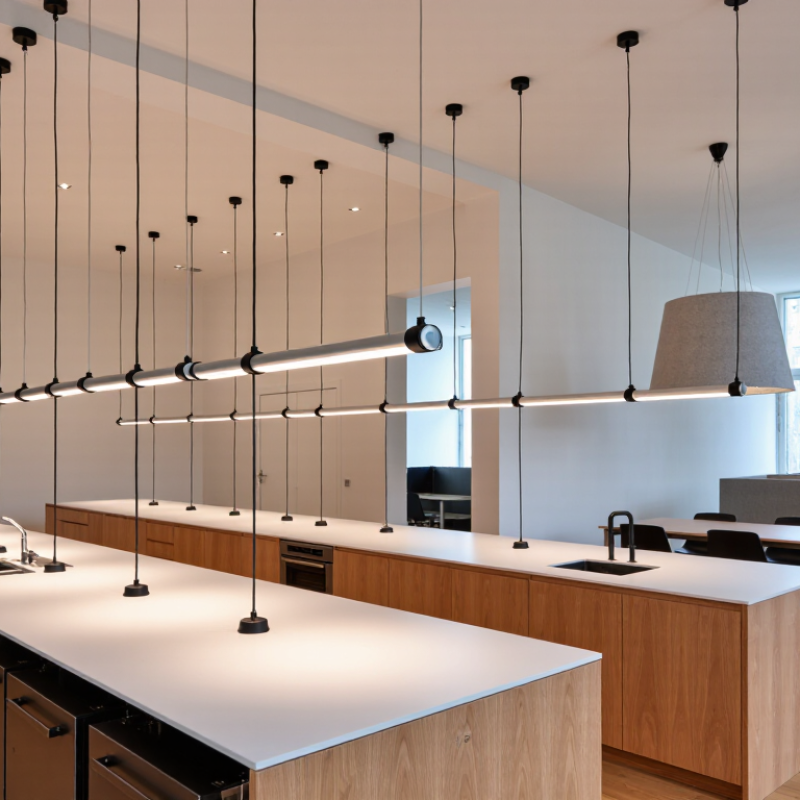
In 2026, a linear lighting pendant is a suspended luminaire whose main light-emitting form follows a long, narrow line. It may use one continuous housing or joined modules, with LEDs, an optical diffuser, and a driver concealed above or inside the body. The defining feature is controlled linear illumination, not merely a slim silhouette. That distinction matters.
A well-specified fixture manages glare, light distribution, and heat while delivering enough light to the work surface. Look for stated lumen output, color temperature, color rendering, dimming compatibility, and serviceable components. A 3000 K setting often feels warmer over a dining table, while neutral white can suit focused work. Room finishes change the result. Numbers help, but mock-ups help more.
Installation details also define the type. Suspension length, ceiling structure, cable adjustment, and driver access affect both appearance and maintenance. Some models send light downward only; others add uplight to soften ceiling shadows. Neither is automatically better. Match the beam shape and output to the task, then check the fitting from seated and standing views. A narrow beam can look crisp in a showroom yet feel harsh above a glossy table. That is easy to overlook.
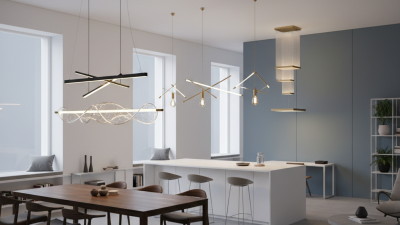
Linear pendant lights distribute illumination along a long axis, making them useful above kitchen islands, worktables, and conference desks. Their performance depends not only on shape, but also on optics, mounting height, and surface finishes. A wide diffuser softens shadows across a countertop; a narrow lens directs more light onto specific tasks. Small detail, big difference.
Many pendants combine direct and indirect output. Downward light supports reading and food preparation, while upward light brightens the ceiling and can soften contrast. In a room with a dark ceiling, that reflected light may contribute little. A pale ceiling usually returns more light to the room. The space may feel calmer, though not necessarily brighter where hands need visibility.
For even coverage, align the pendant with the surface and compare its length with the working area. A fixture that is too short can leave the ends dim; one mounted too low may cause glare or block sightlines. Diffusers help, but they cannot fix poor placement. Still, this is not a perfect rule: glossy counters can reflect light into the eyes, and real rooms vary. Check the beam after installation, especially at night.
The Main Types of Linear Lighting Pendants
Direct-light linear pendants send most of their output downward. They suit kitchen islands, worktables, and desks where clear task lighting matters. A frosted diffuser softens the light and can reduce harsh reflections on a glossy countertop. Check the fixture’s length against the surface below; a short pendant may leave both ends dim.
Some models provide both upward and downward light. The lower light brightens the table, while the upward portion can lift a dim ceiling. This type often works well in dining rooms or open offices. Ceiling color and height affect the result, so the same fixture may feel balanced in one room and weak in another. Details matter.
Adjustable and modular pendants offer more control. Individual sections may connect in a straight line, while adjustable suspension lets installers set the hanging height. These options can help with long counters or changing layouts, but added joints may complicate cleaning and alignment. Decorative linear pendants, meanwhile, treat the fixture as a visible design feature, often using slim frames or exposed light elements. They can look striking, though appearance alone does not guarantee comfortable illumination. There is no perfect type. Compare light distribution, glare, mounting height, and the room’s actual tasks before choosing.
A direct-light linear pendant suits kitchen islands, workbenches, and dining tables where clear task lighting matters. Center it over the surface, not the room. For a six-foot island, one long fixture can create a more even pool of light than several small pendants. Check the beam spread and mounting height; a low fixture may glare when people sit nearby.
Slim suspended pendants work well above conference tables, reception counters, and narrow corridors. Their clean profile keeps sightlines open, especially beneath low ceilings. Choose a diffused lens for softer light on screens and faces. It helps. But diffusion can reduce brightness, so confirm the output is adequate for detailed work.
Up-and-down linear pendants send light toward both the task surface and ceiling. They fit open offices and rooms with pale ceilings, where reflected light can make the space feel less stark. For workshops or high-focus desks, a downward-focused version is often more practical. Adjustable models can be useful in rooms with changing layouts, though moving them often may become a nuisance. A common mistake is choosing by appearance alone. Test glare from seated and standing positions, and consider dimming if the room serves several purposes.
Linear pendants range from slim, direct-light bars to suspended fixtures that send light upward and downward. Modular systems suit long tables or open offices, while acoustic versions combine illumination with sound-absorbing panels. The right type depends less on trend than on the task, ceiling, and room layout. Small details matter.
Start with the fixture’s length and light distribution. A pendant above a dining table should cover most of the tabletop without extending awkwardly beyond it. For a desk, check that light reaches the work area evenly and does not create bright reflections on screens. Compare lumen output, color temperature, and color rendering; a warm tone may feel comfortable at dinner, while a neutral tone can help with detailed work. Ask for photometric data when available. Product descriptions alone can be vague.
Then consider glare, suspension height, dimming, and installation. A deep diffuser or indirect component can soften harsh light, but may send less light directly onto a surface. Confirm that the fixture works with the room’s dimmer and electrical setup. I can overvalue a clean, minimal profile; in practice, comfort matters more than appearance. Not always obvious. Mocking up the fixture’s length with tape can reveal spacing problems before installation. If ceilings are low, a bulky pendant may feel intrusive, even when its dimensions seem reasonable on paper.