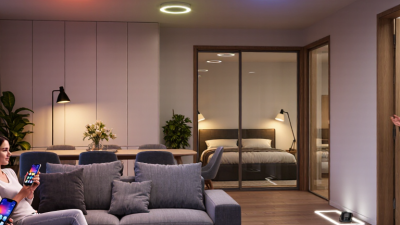
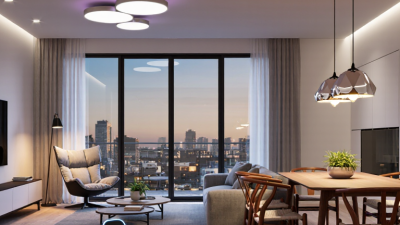
China Top 10 Smart Lights for Home Manufacturers?
Choosing Smart Lights For Home is less about chasing the brightest bulb and more about finding dependable products for everyday rooms. A ceiling light may need soft, even coverage, while a bedside lamp benefits from gentle dimming and warm color. Small details matter. So does reliable support.
This guide introduces ten China-based smart-light manufacturers for buyers comparing product range, customization, quality controls, and communication. It considers practical features such as app setup, voice-assistant compatibility, adjustable color temperature, and dimming performance. These features can vary by model, so specifications should be checked directly with each supplier.
A polished product page is useful, but it cannot replace a sample. Test a bulb in the actual room: look for flicker, uneven color, confusing controls, and delays when changing brightness. Ask about production testing, warranty terms, and how replacement parts are handled. One overlooked question can become an expensive one.
No shortlist is perfect. Manufacturer capabilities, product lines, and service can change, and a factory’s strengths may not fit every project. Treat the companies below as starting points, then confirm current specifications and request clear documentation before placing an order. The right partner should make technical details easy to verify—not merely sound convincing.
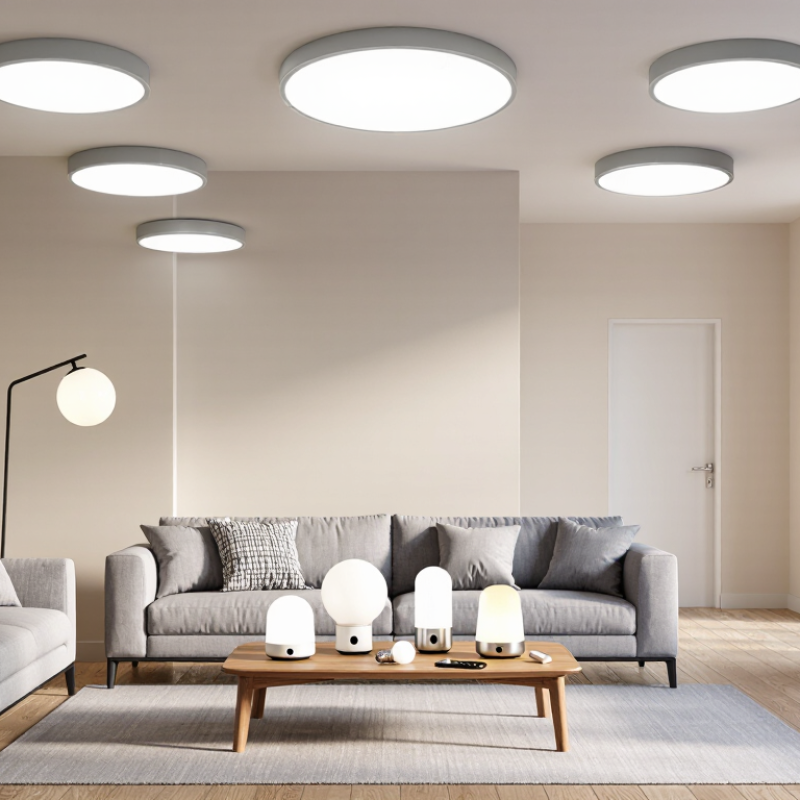
Smart Lighting in China: The DOE Benchmark of at Least 75% Energy Savings
Smart Lighting in China: The DOE Benchmark of At Least 75% Energy Savings
When comparing smart lights for home use, the DOE benchmark offers a useful reference: LED lighting can use at least 75% less energy than traditional incandescent bulbs. This figure describes LED efficiency, not a guaranteed saving for every smart bulb. Actual results depend on wattage, operating hours, brightness settings, and household habits. A bulb left on all evening still consumes energy.
A practical comparison starts with the light’s wattage and brightness, usually listed in watts and lumens. For example, compare bulbs that provide similar brightness, then check how much power each uses. Scheduling and dimming can reduce consumption further, especially in hallways or rooms that are often empty. Still, app controls cannot compensate for poor product specifications. That detail is easy to overlook.
Tips: Check the package for lumens, watts, and standby power. Set schedules around real routines, not ideal ones. Test dimming before buying several bulbs; some lights may flicker at low settings. Keep a simple monthly usage note. Estimates are helpful, but measured habits tell a more honest story.
How to Rank Manufacturers: CRI, CCT, Lumens per Watt, and Connectivity
When comparing China’s smart-light manufacturers, use measured performance rather than catalog claims alone. Check CRI, or color rendering index, and ask whether the figure describes average Ra or includes R9, which matters for saturated reds. A stated CRI above 90 can look impressive. Request a test report for the actual lamp model, not a product family.
CCT should remain consistent across samples and dimming levels. A 2700K setting should feel warm, while 4000K appears cooler; unexplained color shifts may be noticeable on a white kitchen wall. Check the available range, step size, and whether several lamps match when installed together. Small differences can matter.
Compare lumens per watt using delivered light output divided by measured input power. Confirm the test conditions, since efficiency can fall at lower brightness or warmer color settings. Connectivity also deserves hands-on testing. Ask which protocols are supported, how the lights behave after a router outage, and whether local control works without cloud access. Try pairing, dimming, and reconnecting several units in one room. No score is perfect. I would still leave room for a practical check: published specifications do not always predict a smooth installation.
China’s Smart Home Lighting Manufacturers: How to Compare Them
Use measurable specifications—not a brand-name ranking—to compare products. This chart shows approximate light-output reference points commonly used for incandescent bulb equivalents.
How to assess a product: CRI 80+ is a common baseline, while CRI 90+ offers better color fidelity. Check the stated CCT range in kelvin; tunable white products often cover warm to cool white, such as 2700–6500 K. Compare efficacy in lumens per watt (lm/W) at a similar brightness, since higher efficacy means more light for the same power. For connectivity, verify compatibility with the ecosystems and protocols you need, such as Wi-Fi, Bluetooth, Zigbee, or Matter. Light-output values above are approximate references, not manufacturer ratings.
China’s Top 10 Smart-Light Manufacturers: Products, Protocols, and Applications
China’s leading smart-light manufacturers cover more than connected bulbs. Their ranges commonly include tunable-white downlights, RGB strips, outdoor fixtures, sensors, and control gateways. Compare the ten suppliers by product depth, dimming quality, and documented interoperability—not catalog size alone. Details matter.
Protocols shape real installations. Wi-Fi suits standalone rooms, while Zigbee and Bluetooth Mesh can connect larger device groups. Matter can simplify cross-platform setup, but compatibility still depends on device functions and software updates. For commercial projects, DALI-2 supports addressable lighting control, useful in offices, hotels, and corridors. Ask suppliers for test reports, gateway limits, and clear commissioning instructions. A crowded showroom proves little.
Applications reveal different strengths. A kitchen retrofit needs stable low-level dimming and reliable wall control; a warehouse may need occupancy sensors and grouped fixtures. Grand View Research valued the global smart-lighting market at USD 15.05 billion in 2023 and projected a 22.1% compound annual growth rate through 2030. This forecast signals demand, not guaranteed performance. One weakness in many comparisons is limited attention to long-term firmware support. Request sample units and test them in the intended space.
Verifying Suppliers: IEC 62560 Safety, Certifications, Warranty, and Production Capacity
A top-ten shortlist of Chinese smart-light manufacturers is only useful when safety evidence is checked model by model.
The IEA’s Energy Efficiency 2023 report said LEDs represented about half of global lighting sales in 2022, underlining the scale of today’s quality challenge. Ask suppliers for an IEC 62560 test report covering the exact lamp model. This standard addresses safety for self-ballasted LED lamps used in general lighting. Match the report’s model number, voltage range, lamp cap, and test edition against the product and packaging. A certificate for a similar lamp is not enough. Small detail, big risk.
Verify that certificates are genuine and issued by a competent testing or certification body. Confirm their scope and destination-market relevance; one document rarely proves compliance everywhere. Read warranty terms for duration, exclusions, replacement process, and who pays freight. Ask for production records, recent batch inspection results, and capacity evidence such as shift schedules and equipment lists. A factory tour can help, but a staged line may not reflect normal output. I would treat polished paperwork as a useful start, not proof of consistent quality. Check how the supplier handles failures across several batches, not just a perfect sample.