Why Choose LED Ceiling Lights for Your Home?
A ceiling light shapes more than a room’s brightness. It affects how a kitchen looks at breakfast and how comfortable a living room feels after dark. A well-chosen Led Ceiling Light can spread light across a room without taking up floor or table space. The difference is visible on ordinary evenings.
Energy use is another reason homeowners consider LED fixtures. The U.S. Department of Energy’s LED Lighting guidance says residential LEDs use at least 75% less energy and can last up to 25 times longer than incandescent lighting. These figures describe broad comparisons, not a guarantee for every ceiling fixture. Actual savings depend on wattage, daily use, electricity rates, and product quality. Still, fewer bulb changes can matter in a hallway with a high ceiling.
Details deserve a close look. Check the fixture’s lumen output, color temperature, dimmer compatibility, and light distribution before buying. A cool, bright panel may suit a laundry room, while a warmer tone may feel more welcoming above a dining table. The room matters. So does the person using it. LED light is not automatically comfortable, and a poorly chosen fixture can create glare or leave corners dim. That part is easy to overlook. This guide explores the practical benefits of LED ceiling lights, what to compare, and where expectations should stay realistic.
LED Ceiling Lights: Definition, Main Components, and Operating Principle
An LED ceiling light is a ceiling-mounted fixture that uses light-emitting diodes rather than a heated filament. Inside, small LED chips sit on a circuit board, often beneath a diffuser that softens bright points into an even glow. The housing holds these parts, while a mounting plate secures the fixture to the ceiling. A driver regulates the electricity supplied to the LEDs. A heat sink moves excess heat away from the chips, helping maintain stable performance over time. Heat still matters.
When switched on, household alternating current reaches the driver, which converts it into controlled direct current. The current passes through semiconductor chips, where electrical energy produces light. Many white LED fixtures use a phosphor layer to shift some blue light into a warmer-looking spectrum. The diffuser then spreads the light across a room, though its design affects brightness and glare.
Small details count. For example, a dimmer may not work smoothly unless it is compatible with the fixture’s driver. In practical use, check the fixture’s color temperature, lumen output, and mounting requirements against the room and existing ceiling box. Product specifications can vary, and a light that looks comfortable in a showroom may feel harsh over a kitchen table. Inspecting the actual light, when possible, is worthwhile.
Energy Efficiency: DOE Says LEDs Use at Least 75% Less Energy
LED ceiling lights can reduce household electricity use while providing bright, even light. The U.S. Department of Energy says LEDs use at least 75% less energy than incandescent lighting. Compare bulbs with similar brightness, measured in lumens, rather than choosing by wattage alone. For example, replacing a 60-watt incandescent bulb with a 9-watt LED can cut energy use for that light by about 85%. The exact saving depends on the bulbs being compared. Small differences add up.
If a ceiling light runs three hours daily, that 51-watt difference saves roughly 56 kilowatt-hours in a year. Your bill savings depend on your electricity rate and how often the light is used. Light quality matters, too: a warm white tone may feel comfortable over a dining table, while a cooler tone can suit a work area. One detail is easy to miss: an LED may not work well with an older dimmer.
Tips: Check the fixture label and dimmer compatibility before buying. Look for the lumens and color temperature on the package. If the light is enclosed, confirm the LED is rated for enclosed fixtures. I would compare the labels twice; it is a little tedious, but it can prevent flicker or a disappointing color.
Service Life: DOE Reports LEDs Can Last Up to 25 Times Longer
A ceiling light is easy to forget until it flickers above the kitchen table or goes dark in a hallway. That is where LED service life can matter. The U.S. Department of Energy reports that LEDs can last up to 25 times longer than incandescent bulbs. The phrase “up to” matters: it describes potential, not a guaranteed lifespan for every fixture. Heat, frequent switching, and the quality of the fixture’s driver can affect real-world performance.
For a practical comparison, a 25,000-hour-rated LED used three hours daily would reach that rating in about 23 years. It may not last that long in every home. The Illuminating Engineering Society’s guidance distinguishes declining light output from total failure; an LED can still work while becoming dimmer. Check the fixture’s rated life and warranty, and allow space for heat to escape. A sealed ceiling fitting can run hotter.
Fewer replacements can mean less time on a ladder and fewer bulbs to dispose of. A small benefit. DOE figures are useful for comparing technologies, but they do not predict the exact life of a particular ceiling light. Room temperature, use patterns, and installation all count. Even a long-life rating deserves a second look.
Light Quality: Compare Lumens, Color Temperature, and Color Rendering
Why Choose LED Ceiling Lights for Your Home?
Light quality is more than brightness. Lumens measure how much visible light a ceiling fixture produces. A small bedroom may feel comfortable with fewer lumens than a kitchen work area. Room size, ceiling height, wall color, and task lighting all affect the result. A 1,000-lumen fixture can feel bright in a compact hallway, yet seem weak above a large dining table. Numbers help, but they do not tell the whole story.
Color temperature, measured in kelvins, shapes the mood. Around 2,700K gives a warm, yellowish glow that suits relaxed living spaces. Values near 3,500K to 4,000K look more neutral and can help kitchens feel clear without appearing icy. Color rendering matters, too. The Color Rendering Index, or CRI, estimates how naturally a light shows colors. A CRI of 80 or higher works for many rooms; choose closer to 90 when accurate skin tones or fabric colors matter. Still, CRI is only one measure. Two lights with similar ratings may look different. Not quite a perfect comparison.
Tips: Check the fixture’s lumen output, kelvin rating, and CRI before buying. If possible, test the light beside your existing lamps. Notice how a red shirt, a wooden tabletop, and your skin look under it. Confirm that the light is dimmable only if your switch and fixture are compatible. Small detail. It can prevent flicker and disappointment.
Why Choose LED Ceiling Lights for Your Home? — Light Quality: Compare Lumens, Color Temperature, and Color Rendering
| Room or Use |
Example Light Output |
Color Temperature |
Color Rendering (CRI) |
Typical Light Quality |
| Bedroom ambient lighting |
About 1,000–2,000 lumens for the room, often spread across multiple fixtures |
2700–3000 K |
80+; 90+ can make colors look more natural |
Warm, relaxed light suited to winding down. Dimming can help adjust brightness for different activities. |
| Living room ambient lighting |
About 1,500–3,000 lumens for the room, depending on room size and other light sources |
2700–3000 K |
80+; consider 90+ where accurate color appearance matters |
Warm to soft-white light. Multiple fixtures can provide more even illumination than one bright ceiling light. |
| Kitchen general lighting |
About 3,000–4,000 lumens for the room, supplemented by task lighting as needed |
3000–4000 K |
90+ is useful for seeing food and surface colors more accurately |
Neutral to slightly warm light can make work areas feel clear without appearing overly cool. |
| Bathroom or vanity area |
About 1,500–3,000 lumens for general room lighting; mirror lighting may add more |
3000–4000 K |
90+ is a helpful choice for grooming and makeup |
A balanced white light can support visibility. Diffused fixtures help reduce harsh shadows. |
| Hallway or entryway |
About 500–1,500 lumens for the area, adjusted for its length and layout |
2700–3500 K |
80+ is suitable for most general-use spaces |
Comfortable, even illumination helps make transitions between rooms feel natural. |
|
Lumens measure the amount of visible light emitted; they do not indicate color or energy use. Color temperature is measured in kelvins (K): lower values look warmer, while higher values look cooler. CRI is rated on a 0–100 scale and describes how faithfully a light source reveals colors compared with a reference source. Room lumen figures are illustrative planning ranges, not fixed requirements; room size, ceiling height, surface colors, fixture placement, and daylight all affect the amount of light needed.
|
Home Selection: Match Fixture Type, Room Size, Controls, and Safety
Why Choose LED Ceiling Lights for Your Home?
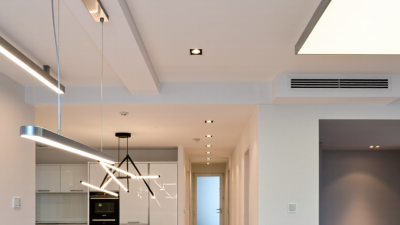
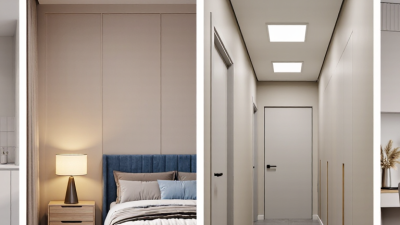
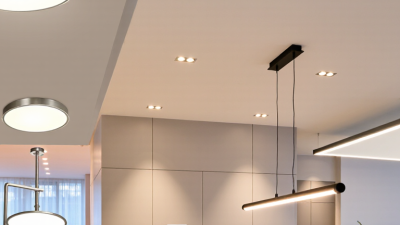
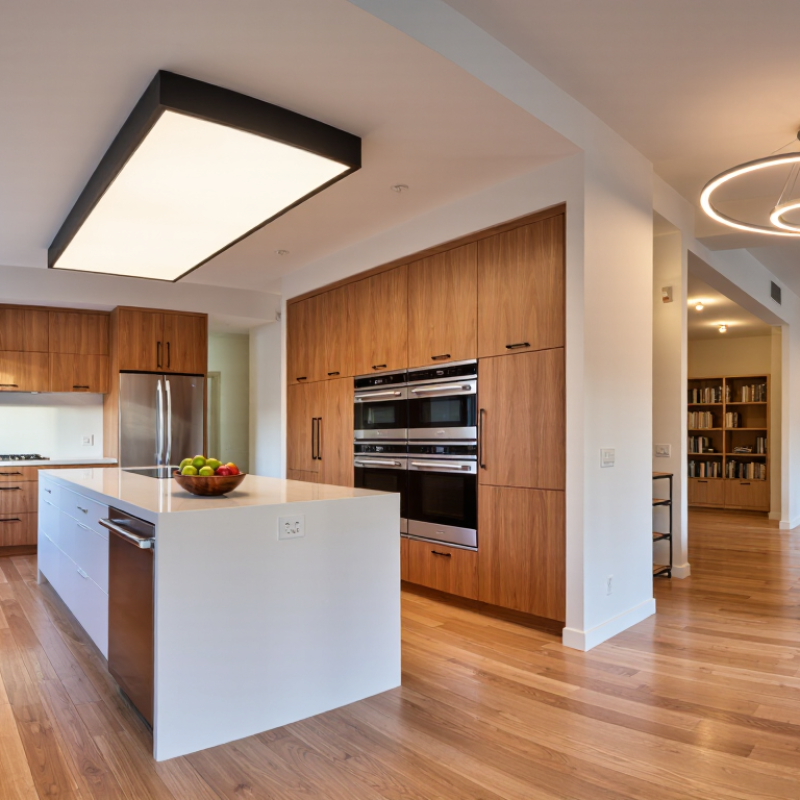
LED ceiling lights work best when the fixture suits the room, not just the décor. In a narrow hallway, a low-profile flush mount reduces bump risks and keeps the ceiling visually calm. A pendant can define a dining table, but check its hanging height and clearance before buying. Measure the room and ceiling. A large fixture can overwhelm a small bedroom, while one tiny light may leave corners dim. A room can look bright on paper yet feel harsh at night.
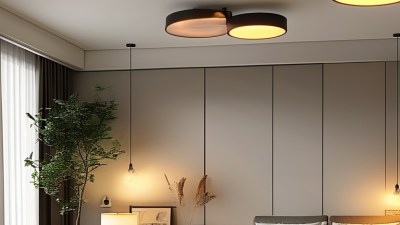
Match brightness to the task. Lumens indicate how much light a fixture provides, while color temperature affects whether the light feels warm or cool. For bedrooms, softer, warmer light may feel more comfortable; kitchens often benefit from clearer task lighting. Dimmers can help shift the mood, but not every LED fixture works with every dimmer. Check compatibility before installation. Small details matter.
Safety deserves the same attention as appearance. Choose a fixture rated for its location, especially in bathrooms or other damp areas. Check the product’s installation instructions and required clearances. If replacing a fixture involves unfamiliar wiring, contact a qualified electrician rather than guessing. Worth checking. Also consider where switches are placed: convenient controls make everyday use easier, while a remote or wall dimmer can be less useful if household members find it confusing.